Cocaine Buzzkill: An XR Game to Take Aim Against the Drug Epidemic
IEEE Gaming, Entertainment, and Media Conference (GEM) 2026
Berlin, Germany, September 2026 · Published; full paper on IEEE Xplore
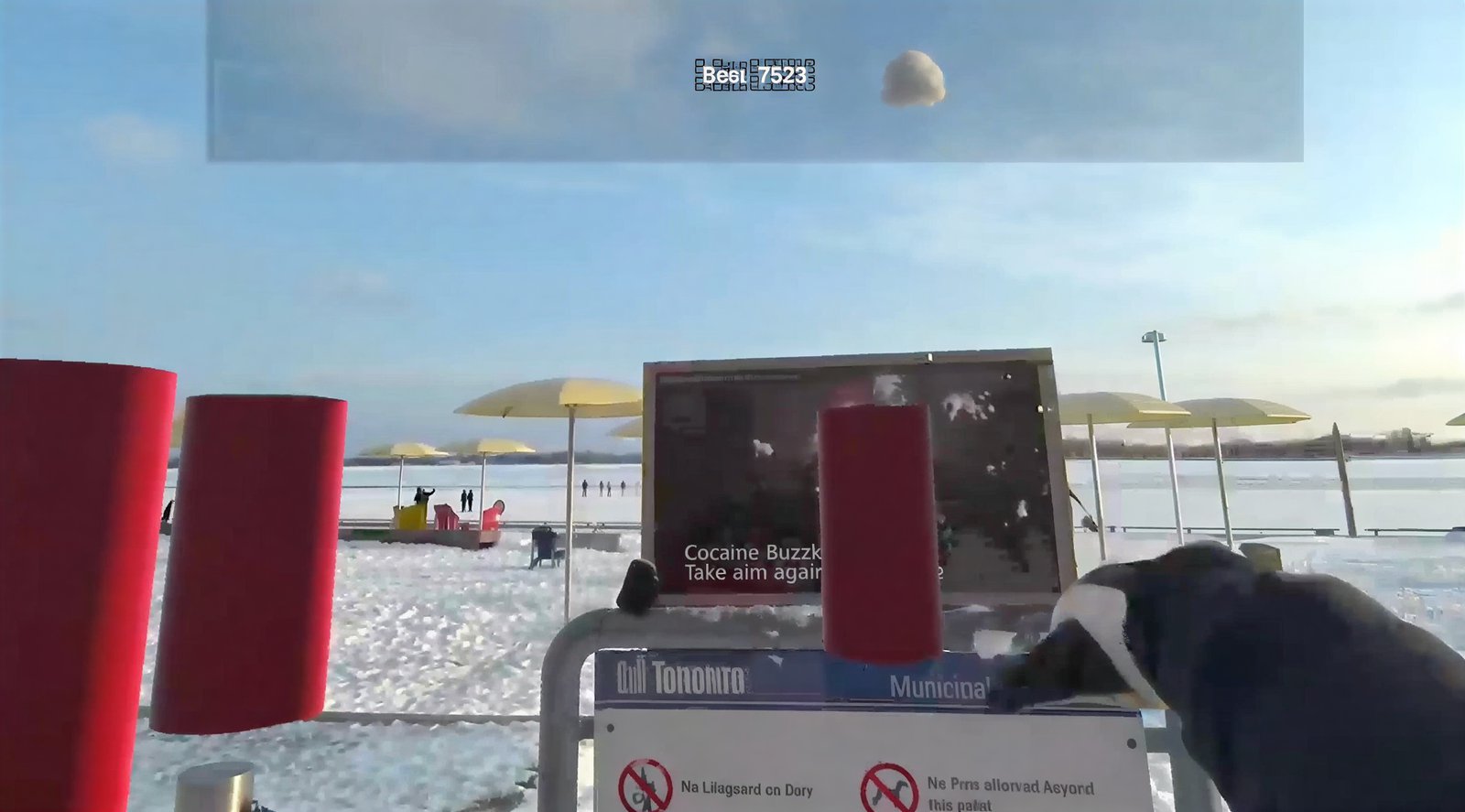
Passthrough XR gameplay: virtual crack-pipe enemies over the real snow-covered beach, snowballs in flight, score and arousal readouts in the HUD.
An outdoor XR game that takes aim at the drug epidemic by exploring cold exposure as an embodied, social and non-pharmacological substitute for cocaine-associated arousal. Players warm up with cold exposure (snow angels, a shirtless walk through the snow), then throw snowballs, real or virtual, at crack-pipe enemies rendered in passthrough on a Meta Quest 3, with physical anti-drug targets set up in the snow.
A Muse headband streams EEG through our MuseLog Android app to the headset, where an arousal index (beta/alpha power) modulates damage, health and the HUD. Deployed in three University of Toronto courses as a teaching platform and as a field instrument for cold-exposure research.
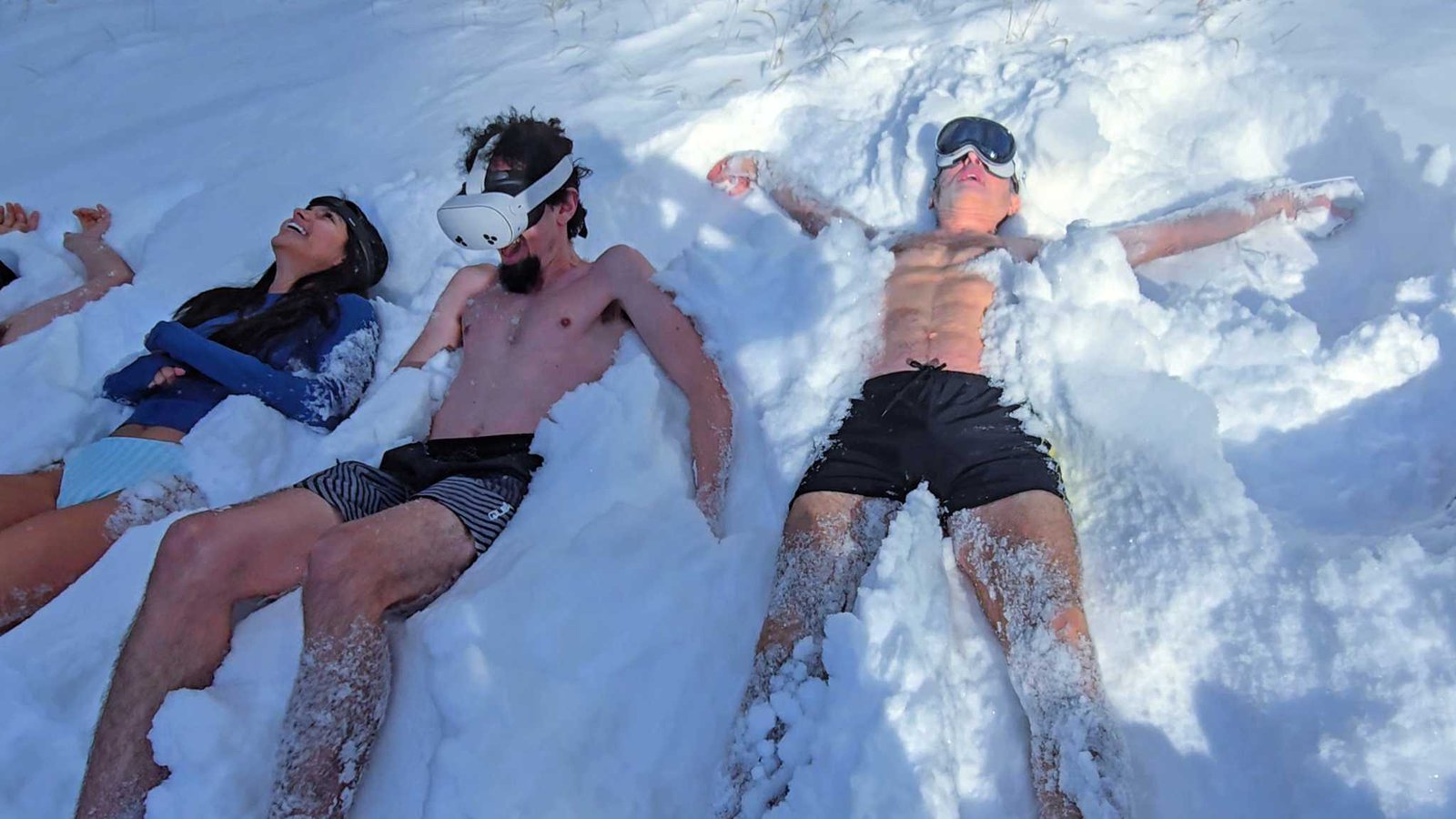
Cold-exposure warm-up: snow angels in XR headsets and Muse headbands before play.
Abstract
Cold exposure, including cold-water immersion and snow exposure, has been reported to elevate dopamine and norepinephrine, producing alertness, mood elevation, and focus through endogenous physiological mechanisms. Cocaine also produces strong dopaminergic stimulation, but through a harmful pathway associated with dependence, cardiovascular risk, and elevated mortality. We present Cocaine Buzzkill, an outdoor eXtended Reality (XR) game that explores cold exposure as an embodied, social, and non-pharmacological substitute stimulus for cocaine-associated arousal. The system combines real cold exposure, passthrough XR gameplay, and real-time EEG biofeedback from a Muse S headband. Arousal-sensitive mechanics map the player’s brain state to snowball damage, snowball size, and game difficulty. We describe the game design, EEG pipeline, preliminary observations, safety issues, and future directions.
Authors
Steve Mann, Alexander Vicol, Aydin Hosseingholizadeh, Khalil Chaghouri, Jeremy Liu, Ethan Yang, Mustafa Can Gursesli
Links
- Paper on IEEE Xplore (DOI 10.1109/GEM72276.2026.11747042)
- Also in the Mersivity / WaterHCI 2026 Symposium Proceedings (Zenodo)
- Related project: Cold Plunge Mini-Golf
- Related project: Chirplets in the Snow