A Brain-Sensing XR Game After the Cold Plunge: Cocaine Buzzkill as a Field Instrument for Arousal and Craving Research
IEEE International Conference on Consumer Electronics (ICCE) 2027
Las Vegas, USA, January 2027 · Submitted to IEEE ICCE 2027; not yet published
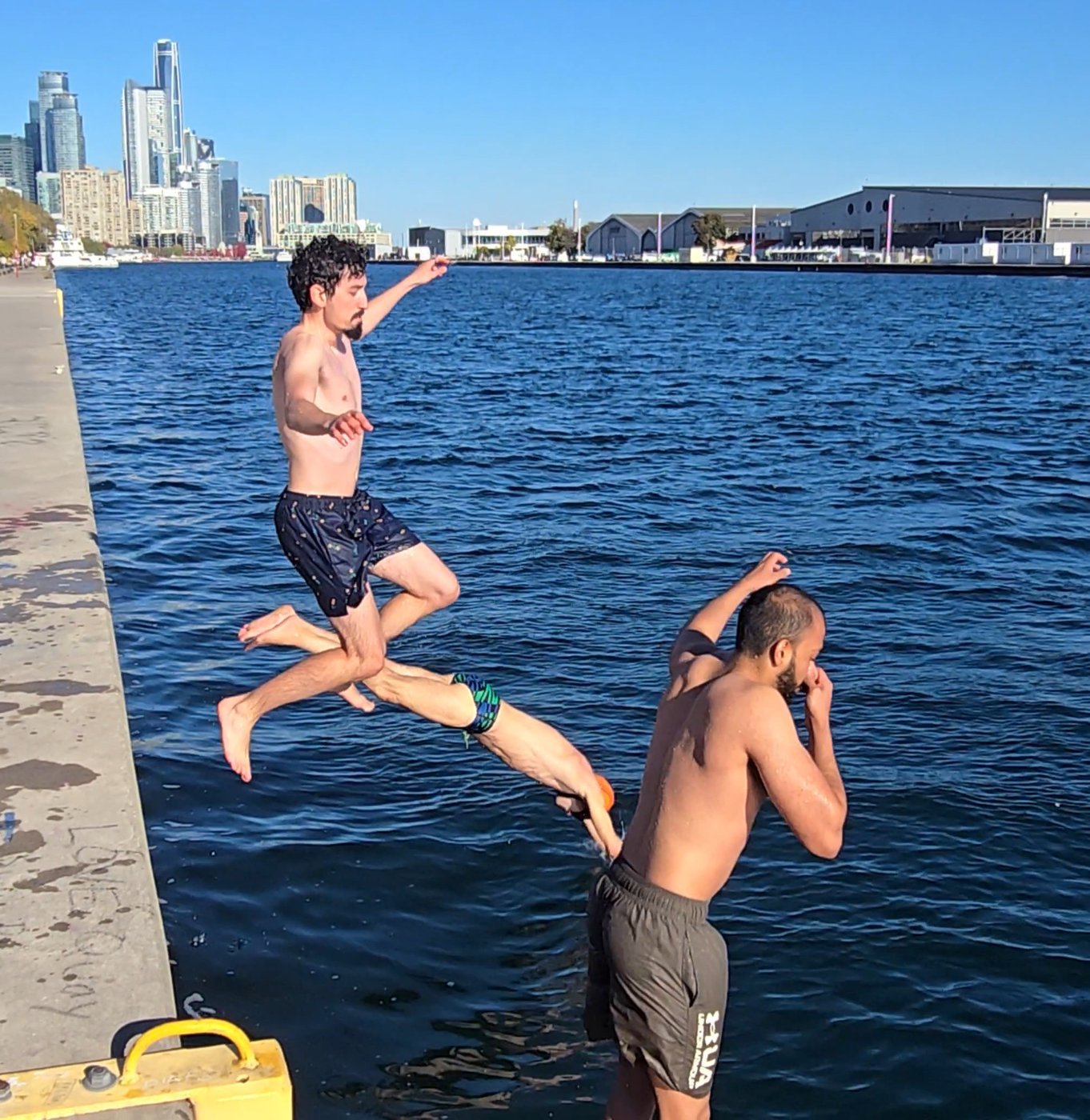
A field day at the lakeshore, October 2026: the plunge comes first, the game right after.
Cocaine Buzzkill is our outdoor passthrough XR game: figures walk up carrying lit crack pipes and you put the flames out with snowballs, while a consumer EEG headband sets the size and damage of your snowballs from your arousal. This paper adds the layer that turns the game into a field instrument: a baseline, check-ins of mood, alertness and cold, a plunge marker, a safety monitor with pause and heart-rate limits, a spotter page on a phone, and logs that render to a one-page report.
Field days with the lab's cold-water swimmers gave ten sittings, warm and straight after a plunge. We make no efficacy or craving claim; the contribution is an instrumented, safe, consented game in which such claims could be tested.
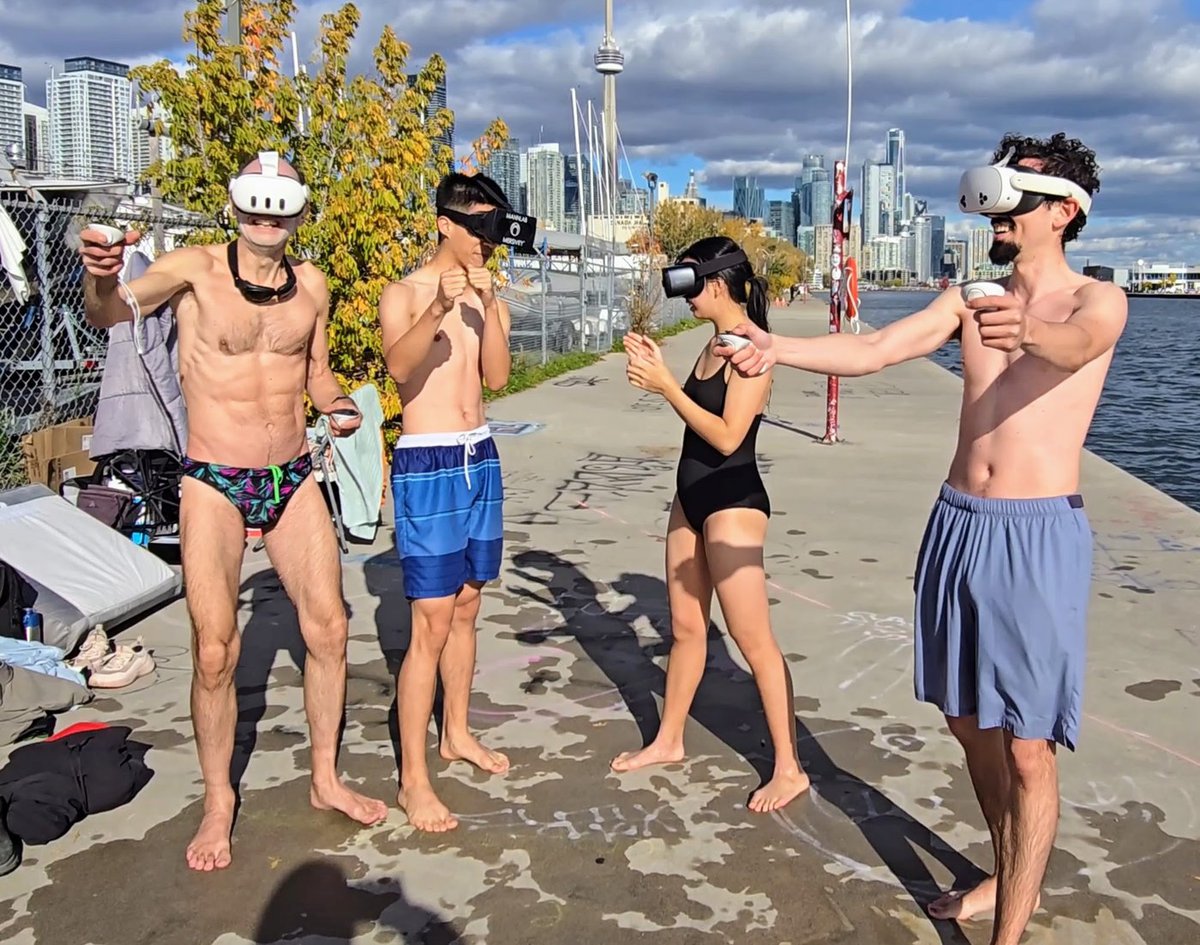
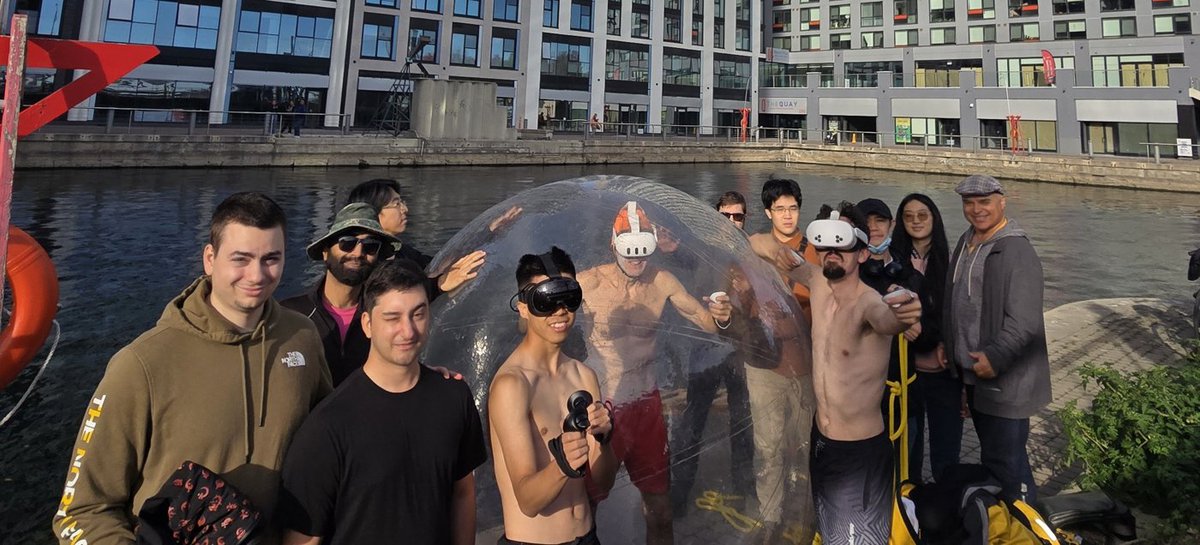
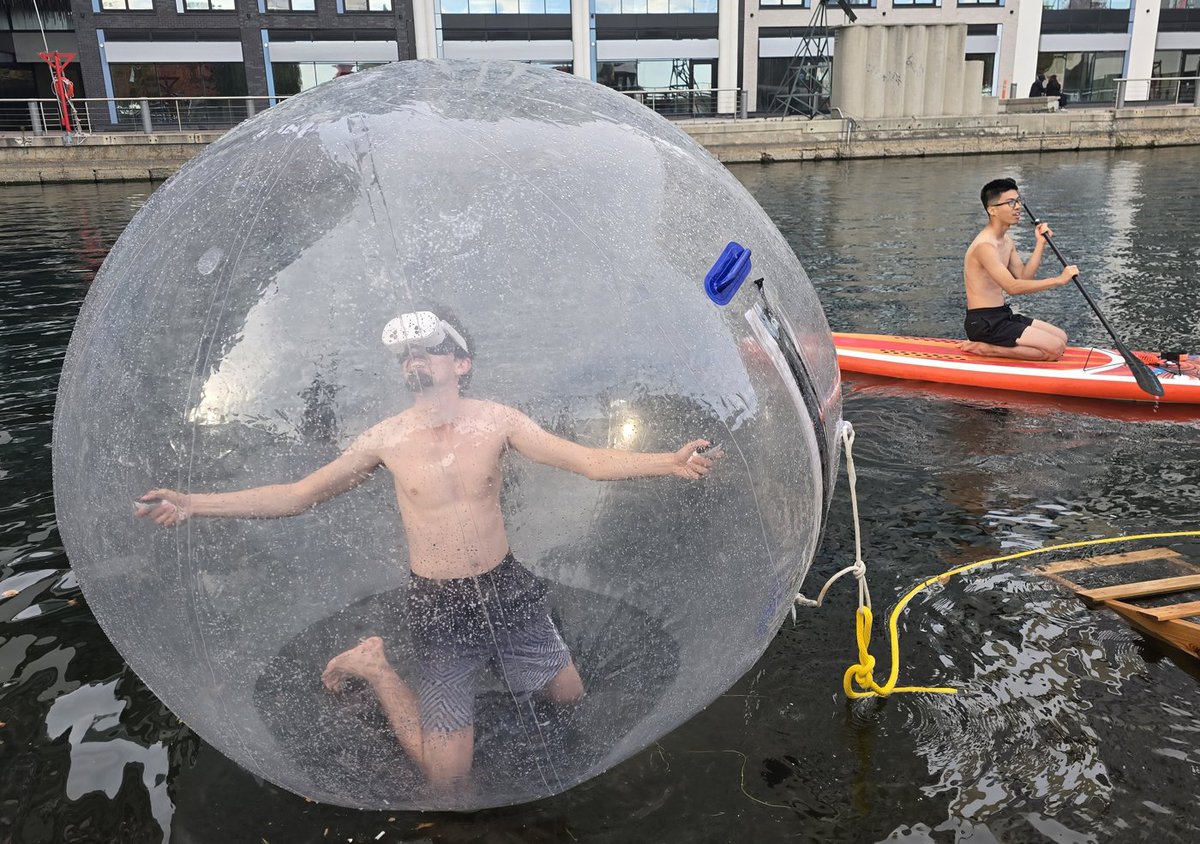

The field crew in headsets at the LOVE sign on the Toronto waterfront.
Abstract
Cocaine Buzzkill is an outdoor passthrough XR game in which figures walk up carrying lit crack pipes and the player puts the flames out with snowballs, played after real cold exposure, with a consumer EEG headband mapping the player's arousal to the size and damage of the snowballs. We describe the session layer that turns the game into a field instrument for the kind of study the iHeal programme set out, passive physiology beside momentary self-report around a craving-relevant state: a 60-second baseline, check-ins of mood, alertness and cold (a craving item is one setting away), a cold-or-warm marker, an 8minute round with an affect grid at wave ends, a safety monitor with pause and heart-rate limits, a spotter page on a phone, consent-gated sharing of the activation estimate between players, and logs that render to a one-page report. Three sittings of one author, one warm and two after a plunge in the lake, show what the sensors give in the field: the optical pulse held in all three (64, 54 and 66 beats per minute), head motion doubled after the plunge, and the dry-electrode EEG, usable on two channels for the warm sitting, was swamped after the plunge by wet hair, shivering and vigorous play. The pipeline therefore gates on amplitude and tells the spotter. Field days at the lakeshore with the lab's cold-water swimmers then gave seven more sittings from the game's own logs, warm controls and sittings straight after a plunge: in the warm sittings 13 to 17% of throws hit and mood and alertness rose in every one; the first two sittings after the plunge hit 4 and 6%, and two began with every check-in at its maximum and ended lower. With the headband streaming to the game after a plunge, 74% of play samples passed its contact and artefact gates. No efficacy or craving claim is made; the contribution is an instrumented, safe, consented game in which such claims could be tested.
Authors
Alexander Vicol, Steve Mann
Links
- Paper submitted to IEEE ICCE 2027 (Las Vegas, January 2027). A link will appear here once it is published.
- Related project: Cocaine Buzzkill
- Related project: Cold Plunge Mini-Golf
- Related project: Cold Water and the Brain