Mind over Motor: Driving a Small Car from Arousal and Head Tilt with a Consumer EEG Headband
IEEE International Conference on Consumer Electronics (ICCE) 2027
Las Vegas, USA, January 2027 · Submitted to IEEE ICCE 2027; not yet published
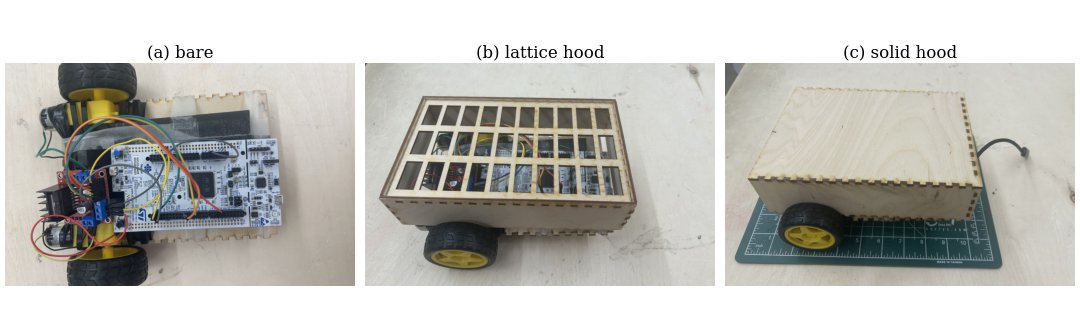
The car three ways: bare, with the laser-cut lattice hood, and with the solid plywood hood. An STM32 NUCLEO board drives the motors from commands sent by the phone.
Everyone who puts the headband on does the same thing. They frown, concentrate hard, and the little car creeps forward. Then they laugh, relax, and it stops. That is the whole idea, and it works within a minute with no training at all.
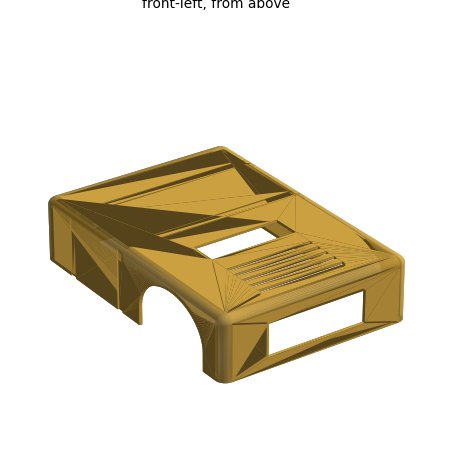
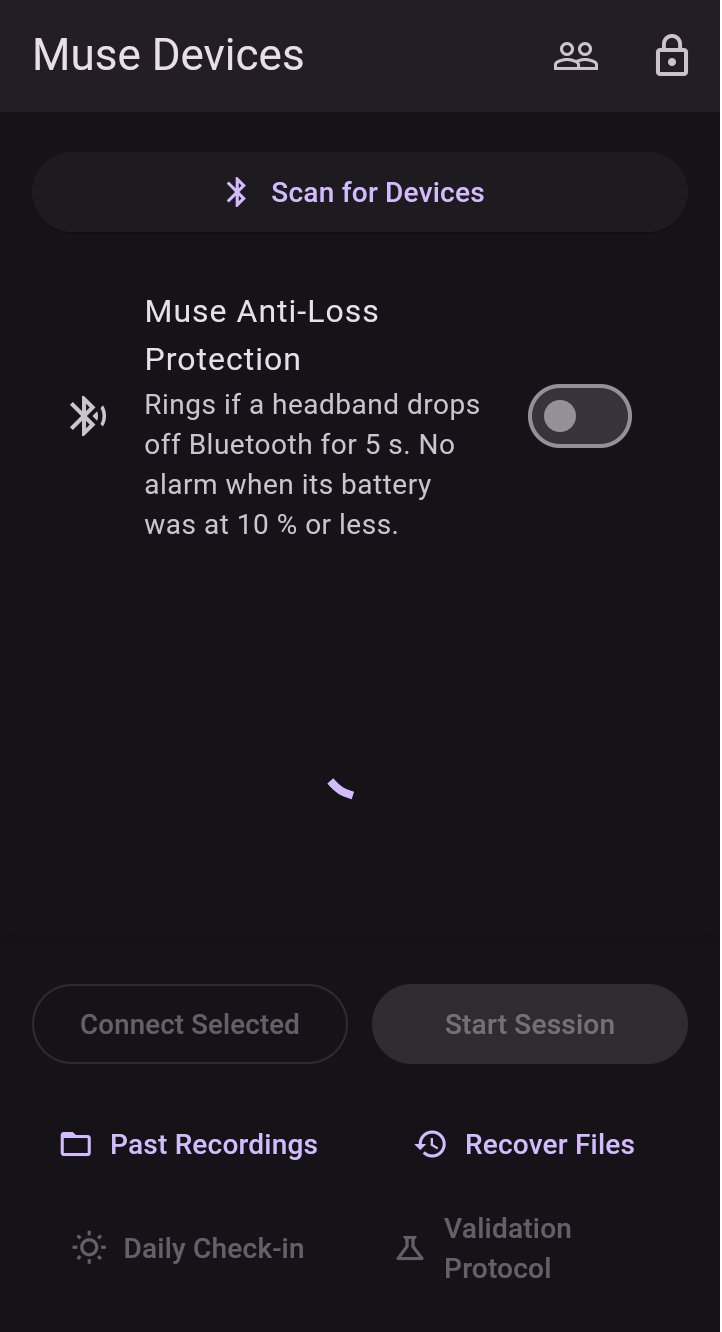
The car is a two-wheeled chassis with an STM32 NUCLEO board. A Muse 2 headband streams EEG and head motion to a phone running our MuseLog app, which turns an engagement index into a speed request and sends it on; tilt your head and the car turns. It is a passive brain-computer interface, which means it reads a state you already have instead of asking you to learn one. We also laser-cut two plywood hoods for it, a lattice and a solid one, because a bare board on wheels looks unfinished at a demo.
The code is open source on GitHub if you want to build your own.
This paper is not yet published, so this page gives only a short summary. The full write-up and a link to the paper will follow publication.
Authors
Alexander Vicol, Jianzi Zhang, Huitian Song, Yubin Zhang, Rui Zhang, Steve Mann
Links
- Paper submitted to IEEE ICCE 2027 (Las Vegas, January 2027). A link will appear here once it is published.
- Related project: 6ense
- Related project: EEG Word Keyboard
- Related project: Telekolympographic Swim Control
- Code on GitHub (Libritor/musecar)