MindMesh: 3-D Printed Circuits for Head-Mounted Neural Interfaces
28th Annual Mersivity / WaterHCI Symposium 2026
Toronto and online, March 30 to May 10, 2026 · Published in the symposium proceedings (open access on Zenodo)
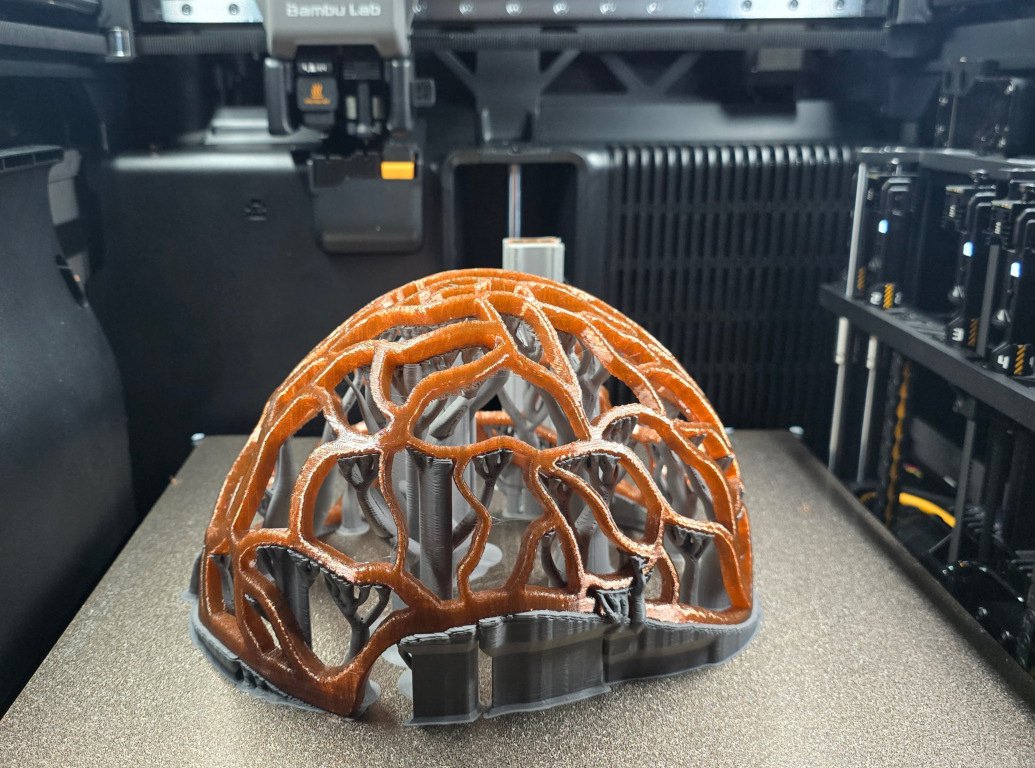
A MindMesh coming off a Bambu H2C printer: the mesh follows the wearer's own head, and the printer lays down conductive and clear filaments for the circuits.
Dry electrodes on a headband move when you do, which is why wearable EEG fails in the water. The MindMesh is Mann's answer from the 1970s: a mesh cap fixed to the skull so every sensor sits in exactly the same place for years. It carries EEG and fNIRS, wireless links, and even an EyeTap seeing aid, and it is meant for swimming, paddleboarding and balling.
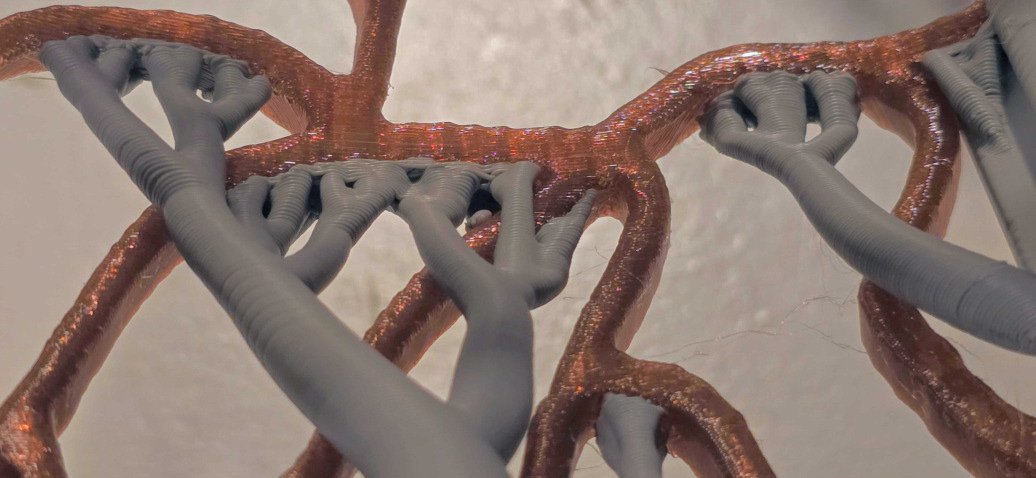
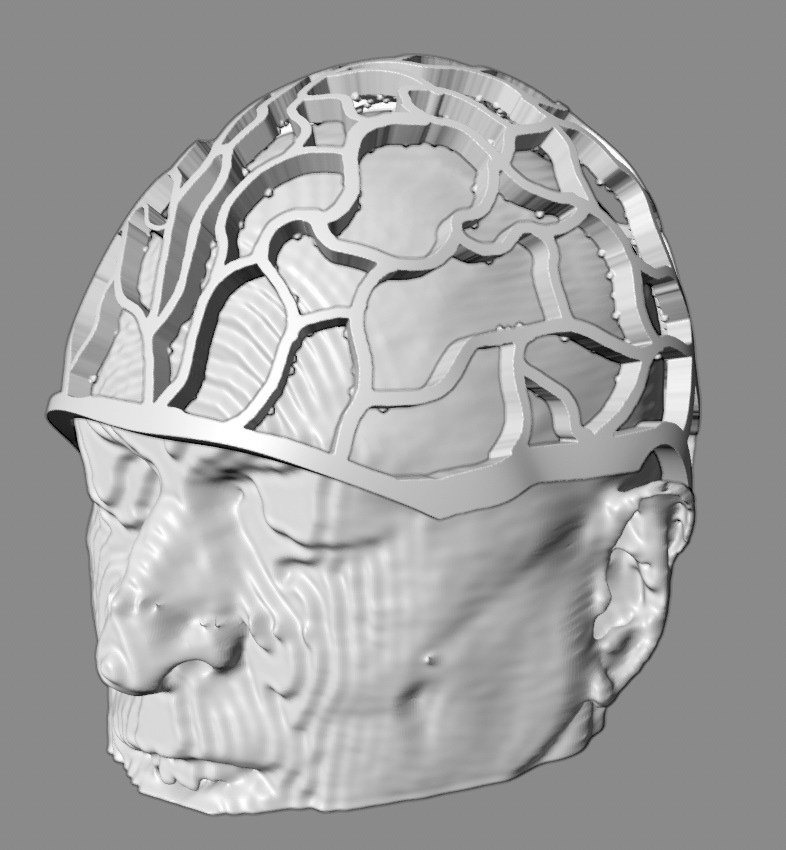
What is new is the manufacturing: a Bambu H2C printer with filaments of different conductivity and transparency prints the circuits into the mesh, from a head scan, so each one fits one person.
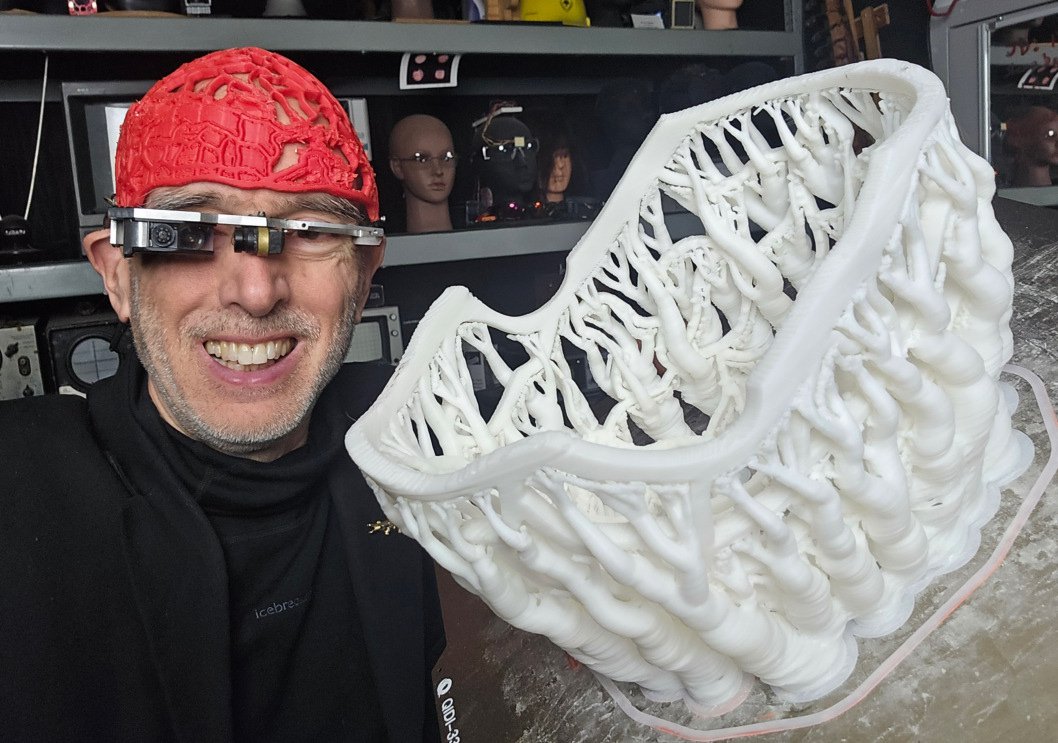
Steve Mann wearing a red MindMesh and holding a white one: he has worn versions of this since the 1970s.
Abstract
The Mindmesh is an advanced neural network that takes the form of a mesh-shaped cap for being semi-permanently or permanently attached to the skull for perfect subject-specific alignment in demanding real-world environments such as open-water swimming. It is both an advanced BCI (Brain-Computer Interface) as well as a carrier for other sensing and metasensing hardware such as an EyeTap seeing aid (computer vision system). It shields the brain-sensing while providing wireless communications and sensors that can be distributed over the entire head surface for maximum comfort during long-term or lifelong use. This allows freedom of movement in activities such as swimming, paddleboarding, and Safetyballing, while mitigating movement artifacts of standard temporarily-mounted electrodes. While in use for more than 40 years, we now present an updated design methodology using a Bambu H2C printer fitted with filaments of various conductivity and transparency for printing of electro-optical circuits in combining EEG with fNIRS along with other more advanced technologies for long-term use in daily activities. Mindmesh is potentially useful for those with disabilities by facilitating water-based exercises.
Authors
Steve Mann, Alexander Vicol, Khalil Chaghouri, Aydin Hosseingholizadeh
Links
- Paper in the Mersivity / WaterHCI 2026 Symposium Proceedings (Zenodo, open access)
- Related project: Mind to Matter
- Related project: 6ense
- Related project: Eye as a Camera