The Ship of Kolympi: Opting out of the world's oldest cyborg technology
27th Annual Mersivity / WaterHCI Symposium, Summer 2025
Toronto and online, June 20 to August 25, 2025 · Published in the symposium proceedings (open access on Zenodo)
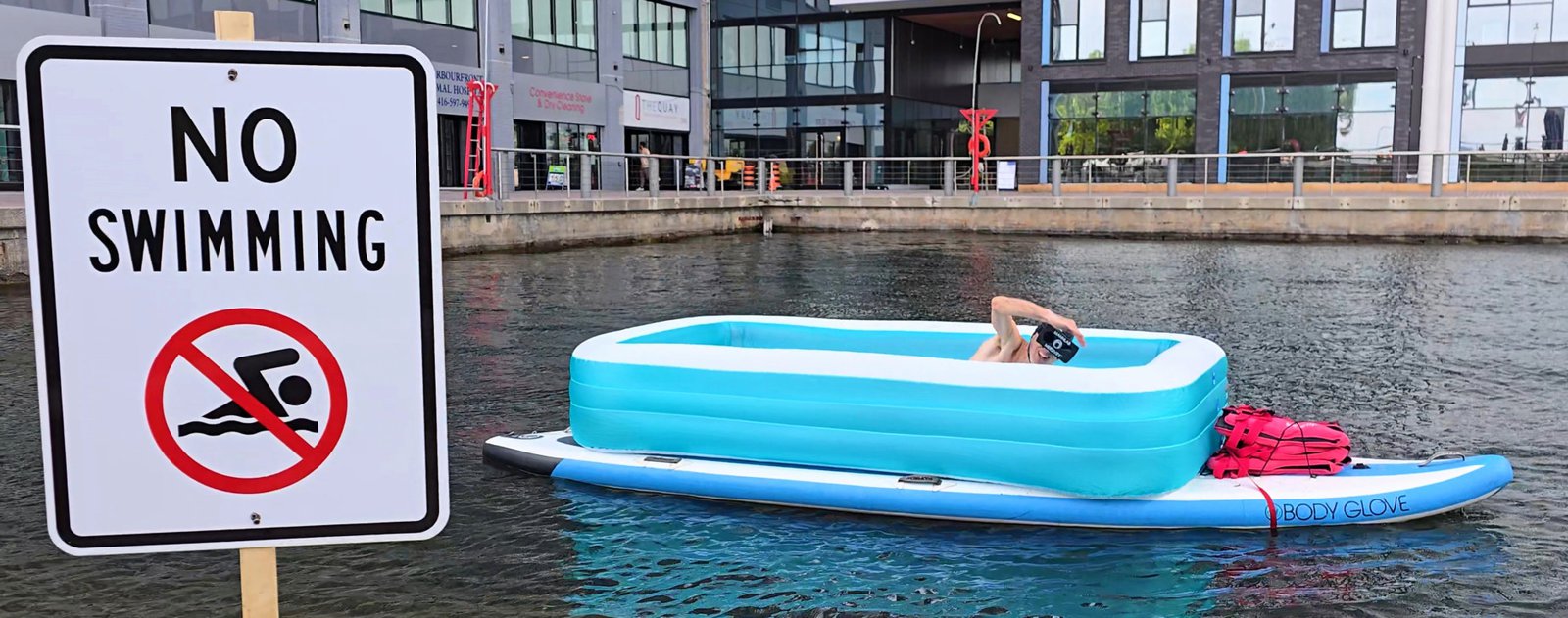
The Ship of Kolympi in its simplest form: an inflatable pool aboard a paddle board, floating past a NO SWIMMING sign. Not swimming, just in my pool on my vessel.
Kolympi is Greek for swimming. Manfred Clynes, who coined the word cyborg, liked to say the bicycle was his favourite cyborg technology; Steve Mann argues the boat is older and better, and that the word cybernetics itself comes from steering a vessel. The Ship of Kolympi is an allegory about who gets to steer, and about the right to opt out of cyborg technology altogether.
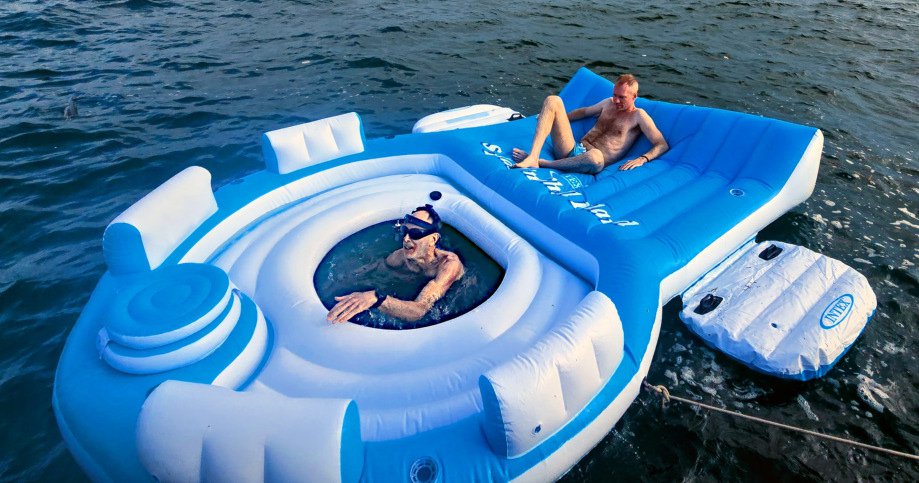
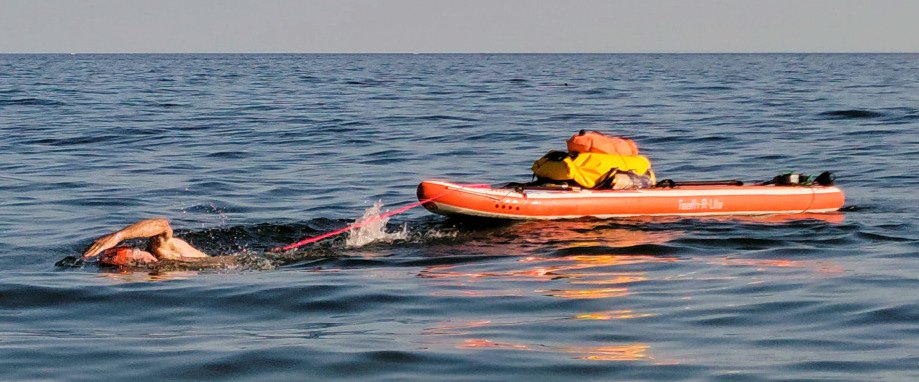
It is also a real thing you can build in an afternoon: a children's wading pool on a family-sized paddle board, with thrusters that answer to your swimming strokes, so that you swim in your own pool aboard your own vessel while the city's NO SWIMMING signs look on. The paper walks down the ladder of ever-smaller vessels, the Towboat, the Wearaboat, the Neckboat, until the legal fiction of the sign becomes plain.
Abstract
In 1960, Manfred Clynes coined the word "cyborg" (cybernetic organism) as a nexus of humans and technology. His favorite example of cyborg technology is the bicycle. I have argued that an even better example is the boat, ship, or vessel. Indeed, the word "cybernetic" is an Ancient Greek word "kubernetes" which means "to steer" a vessel, in regards to a helmsman ("kuberman"), and forms the word "governor" in the sense of the Latin word "gubernare" meaning "to steer or govern" (as in "gubernator" or "gubernatorial" which means "of or relating to a governor"). Accordingly, "The Ship of Kolympi" is an allegory for responsible sociocyberphysical technology governance with regard to cyborg technology in its many variations, including its absence.
Authors
Steve Mann
Links
- Paper in the Mersivity / WaterHCI Summer-2025 Symposium Proceedings (Zenodo, open access)
- Related project: Telekolympographic Swim Control
- Related project: Swiminalization and (K)No(t)-Swimming
- Related project: State-of-Float
- Related project: Peter Street Basin Master Plan