ABC Vehicraft: The Aerial Boat Car, and What a Consumer EEG Headband Records While Riding It
IEEE International Conference on Consumer Electronics (ICCE) 2027
Las Vegas, USA, January 2027 · Submitted to IEEE ICCE 2027; not yet published
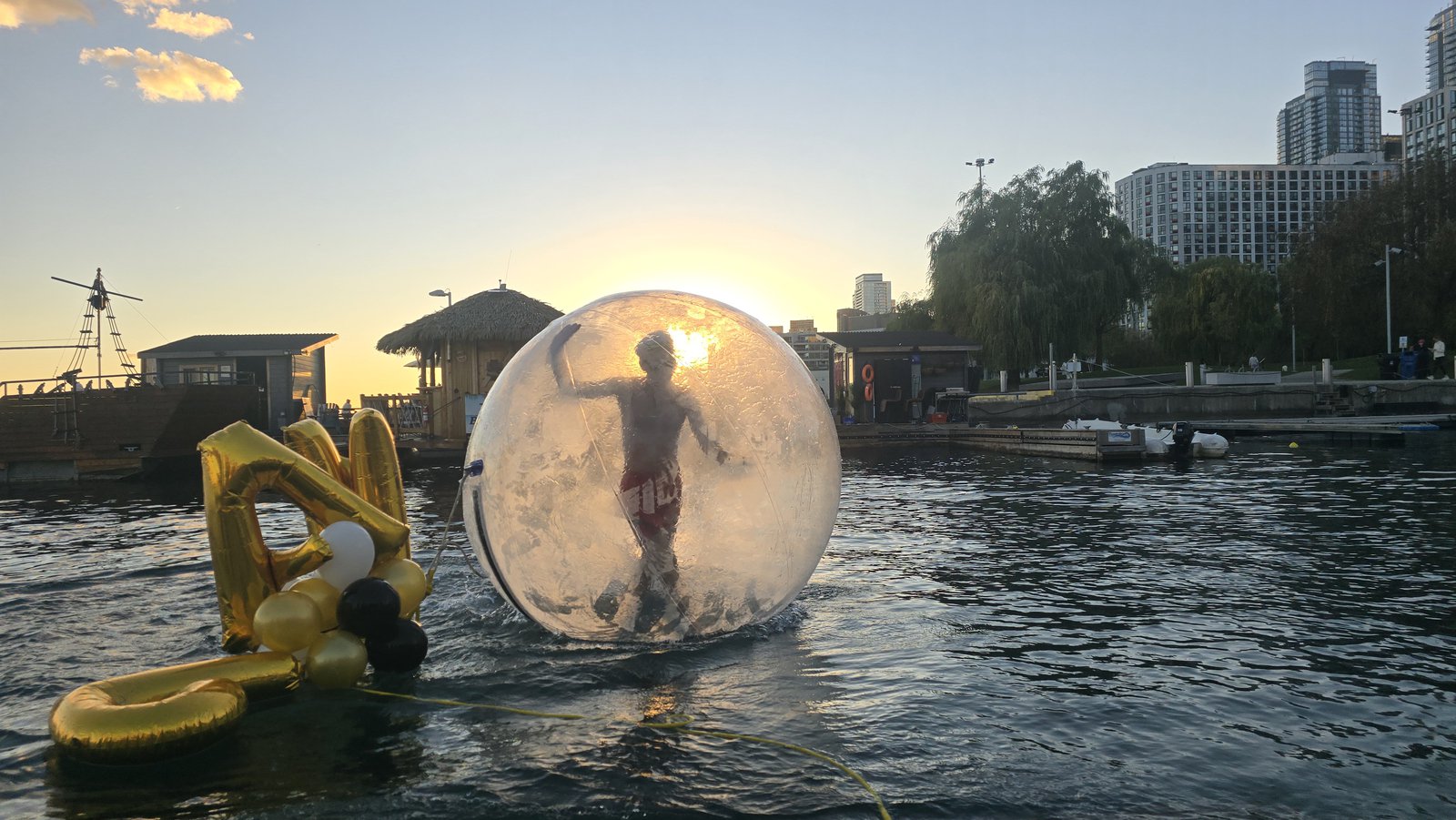
The ball design at sunset in Toronto's inner harbour, October 9, 2026: a water-walking ball with its helium balloon cluster, the rider inside wearing a Muse S Athena headband.
What if one craft could fly, float and roll? The ABC Vehicraft is our answer, built three ways in one afternoon on the harbour: a paddle board with a cluster of helium balloons, a water-walking ball with balloons, and a small inflatable we call the Billy boat, also with balloons. Steve Mann rode all three wearing a Muse headband streaming to a phone, no headset and no laptop.
The paper is as much about the measurement as the craft. A wet, moving, open-air headband gives very different data on a board, in a ball and in the water, and we say exactly what it gave: which electrodes stayed usable, how much of the signal was motion rather than mind, and the recording rules we will follow on the next ride.
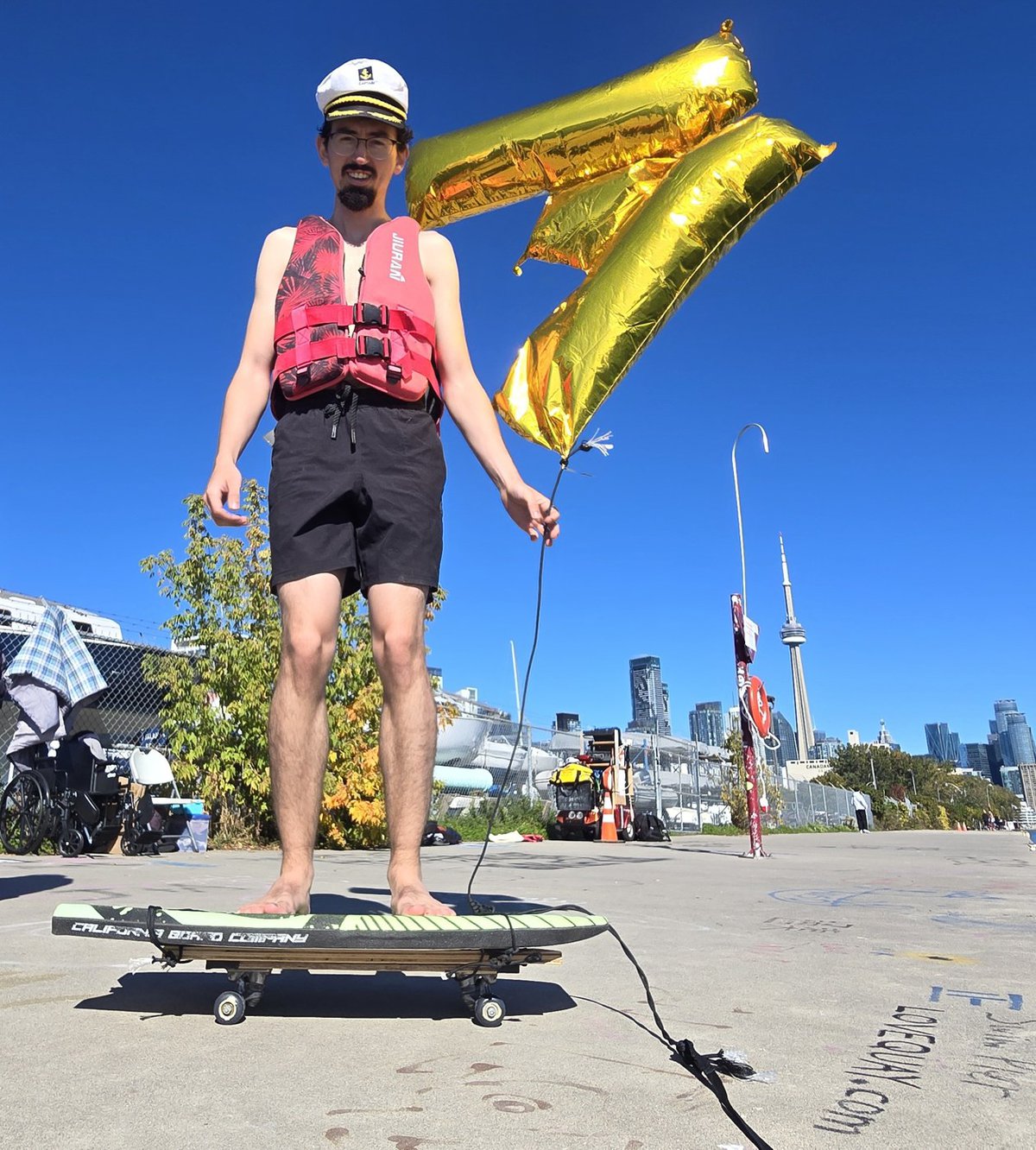
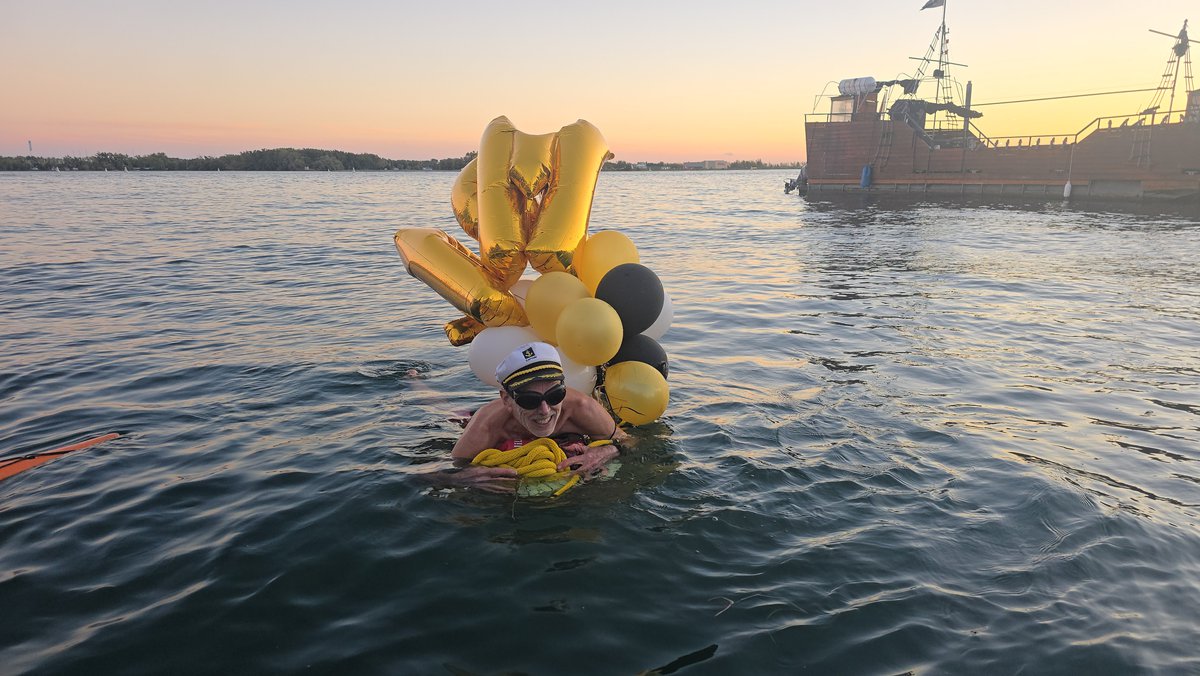
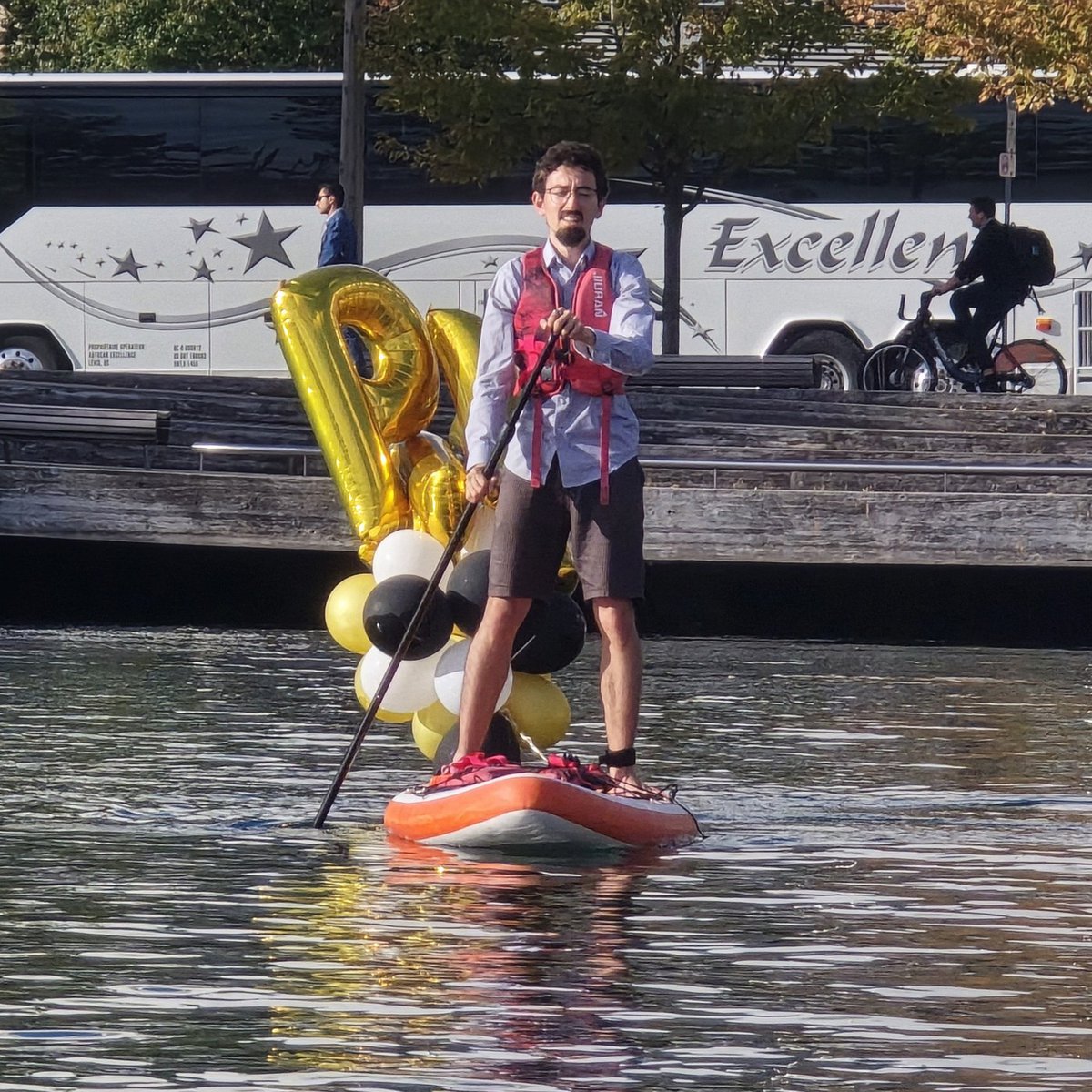
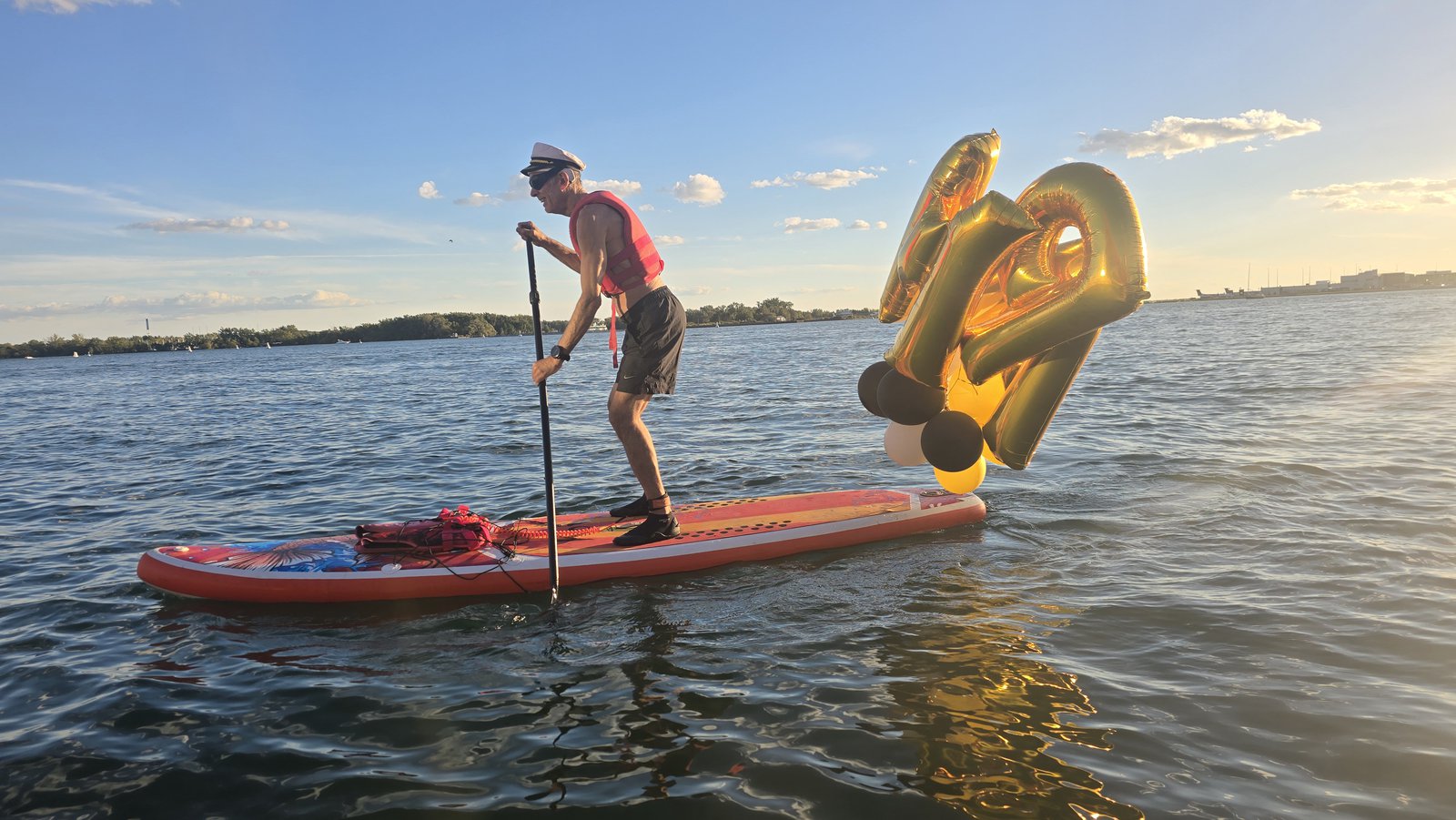
The paddle-board design: the same balloons, a board instead of a ball. This one gave the cleanest EEG of the three.
Abstract
We introduce the ABC Vehicraft, a craft that is at once aerial, boat and car, and report the first brain-sensing recordings taken while riding it. We tested three designs, each carrying its own helium balloon cluster as the aerial element: a paddle board with balloons, a water-walking ball with balloons, and the Billy boat with balloons, a small inflatable ridden in the water with the ears at the waterline. On one afternoon in Toronto's harbour the second author rode all three wearing a Muse S Athena headband streaming to a phone. No headset, no laptop, no marker, 3.6 to 4.9 minutes per mode. We ask what such a recording is good for. The paddle board gives usable EEG on 88% of 2 s epochs behind the ears and 98% on the left forehead; the ball halves that and the Billy boat leaves one epoch in six behind the ears. The theta/beta ratio, the attentional-control marker of our State-of-Float work, reads 2.7 on the paddle board, 1.6 in the Billy boat, and 6.9 in the ball, where a 2.4 Hz step rhythm in the accelerometer and a threefold rise in delta and theta say that the number is motion, not mind. The headband's own arousal index sat at 0.41, 0.49 and 0.47. The optical channels logged nothing, so there is no fNIRS. The paper's contribution is the craft and an honest account of what a wet, moving, open-air headband gives, with the recording rules that follow for the next ride: a strap over the band, dry ear sites, a logged fNIRS stream, a trigger per mode, and two-minute eyes-open and eyes-closed blocks in each.
Authors
Alexander Vicol, Steve Mann
Links
- Paper submitted to IEEE ICCE 2027 (Las Vegas, January 2027). A link will appear here once it is published.
- Related project: State-of-Float
- Related project: The Ship of Kolympi
- Related project: Swiminalization and (K)No(t)-Swimming