A Literacy-Free, Report-Free Eye Exam on a Consumer EEG Headband and VR Headset: Toward Objective Vision Screening by Community Health Workers
IEEE International Conference on Consumer Electronics (ICCE) 2027
Las Vegas, USA, January 2027 · Submitted to IEEE ICCE 2027; not yet published
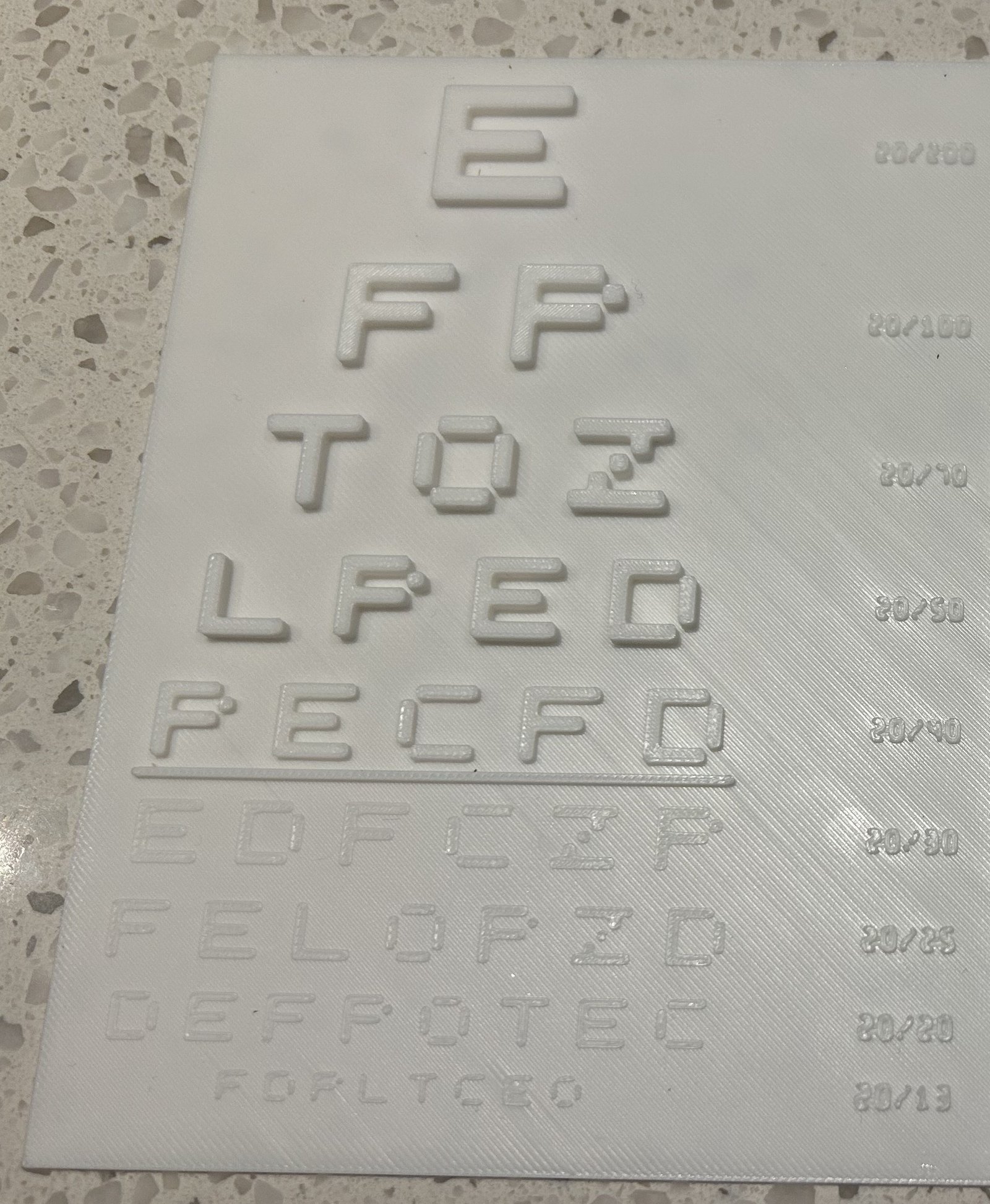
The result, printed: a raised letter chart with the acuity of each row along the side, a report the person can hold whether or not they can read.
At least a billion people have a vision problem that could be prevented or treated, and much of the problem is screening: a letter chart needs someone who can read it and someone who can judge the answers. In our exam the subject only looks at a dot with one eye covered. A pattern flickers, the visual cortex follows it, and the headband reads the response.
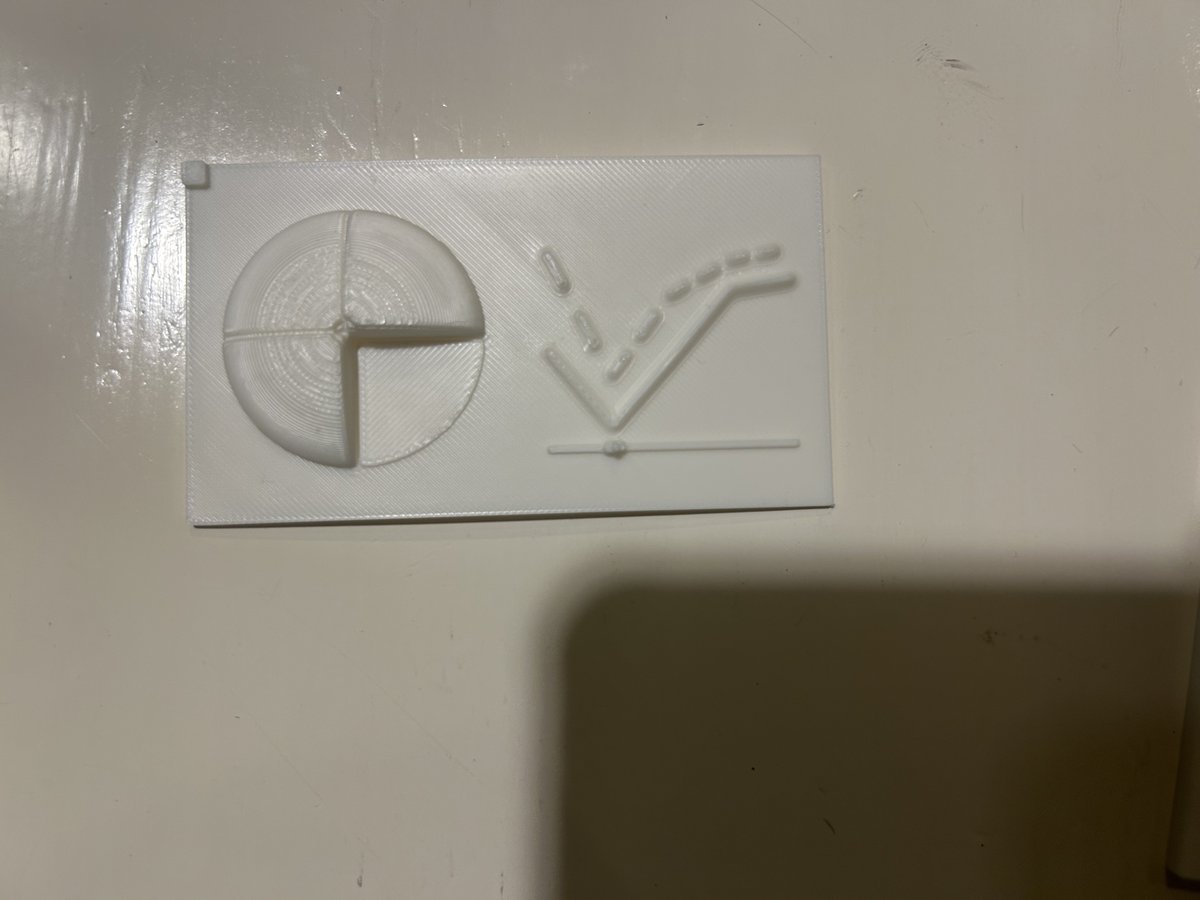
Twelve tests come out of that one trick: acuity, vernier acuity, contrast, visual field, gaze, astigmatism, colour, the light threshold and more. A synthetic subject checks the whole software stack, and on one person the exam found a response in both eyes and an acuity that repeated six days later. The results print in 3-D as a raised chart. It is a research prototype, not a diagnostic device, and we say so.
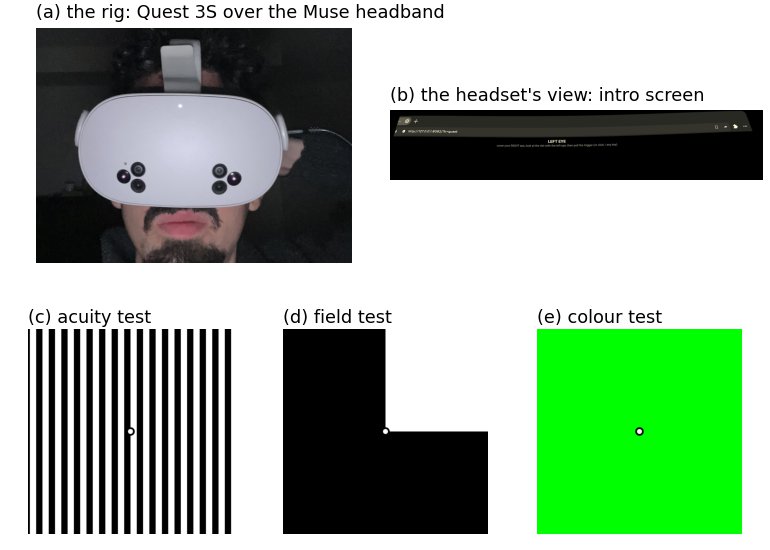
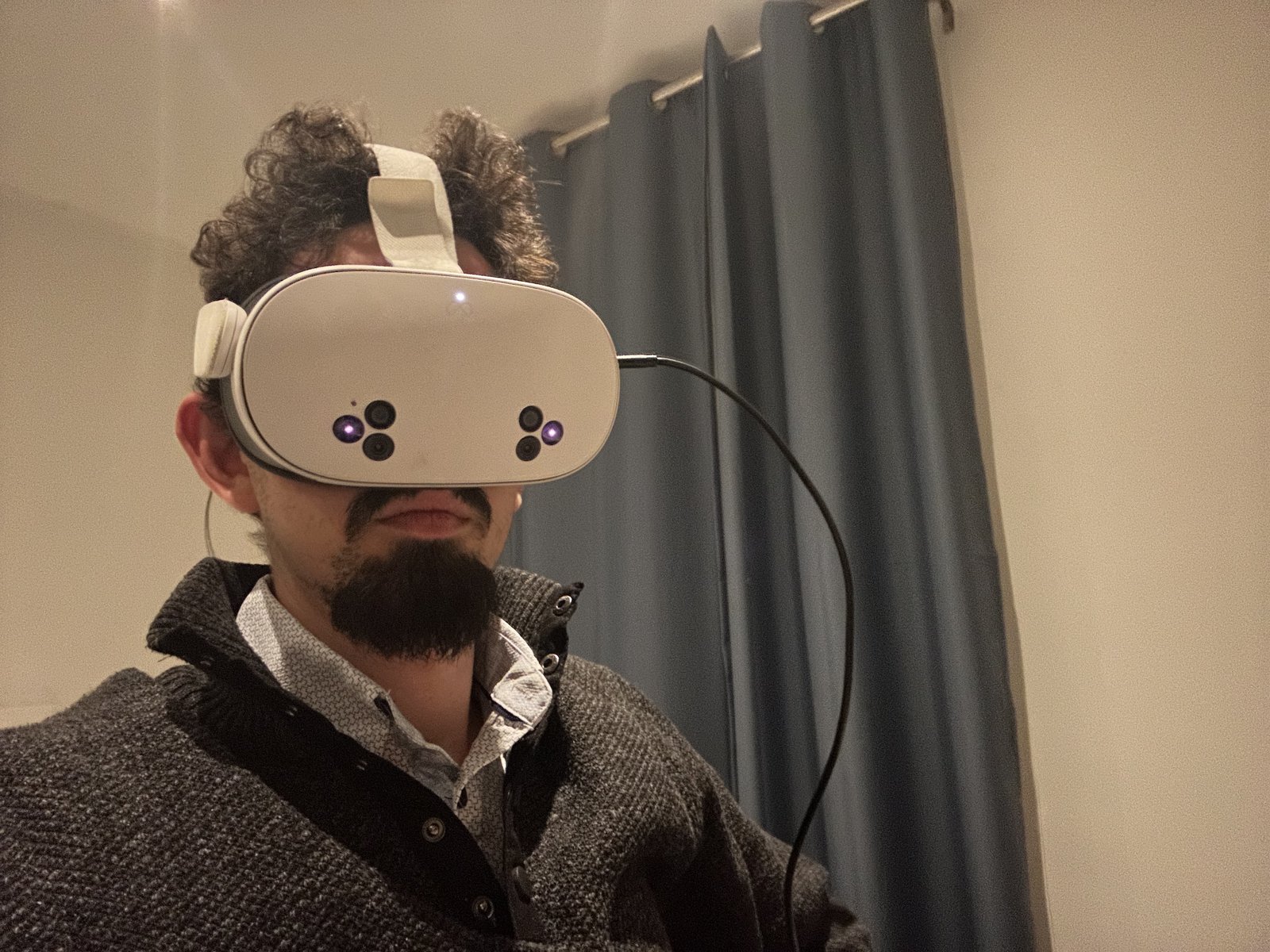
The exam rig: a Meta Quest 3S showing the stimulus in its web browser, worn over a Muse headband with one added electrode over the visual cortex.
Abstract
At least a billion people have a preventable or unaddressed vision impairment, and much of the problem is screening: a letter chart needs a subject who can read it and an examiner who can judge the answers. We built an eye exam in which the subject only looks at a dot with one eye covered. It runs on a Muse headband with one extra electrode over the visual cortex and a Meta Quest 3S that shows the stimulus in its web browser, for under 600 US dollars in total. Twelve tests are read from the steady-state visual evoked potential (SSVEP): acuity, vernier acuity, contrast and its sensitivity function, visual field, gaze, four meridians for astigmatism, red/green flicker photometry, colour, the light threshold, and the eye's temporal tuning and apparent latency. A synthetic subject with known deficits passes all 39 checks of an end-to-end test of the software, so the system can be checked without a patient. On one person, the first three sittings found nothing because the headset's browser was running an old cached copy of the page. Once we verified what the headset actually displayed, the next three sittings gave a flash response in both eyes, an acuity limb down to 6 arcmin that repeated in the same eye six days later, a response at every gaze position, and a red/green photometric null at the same mix in both eyes. They also showed that a loose electrode can pass a significance test without carrying the visual response. On a laptop panel at a measured distance, the reversing bars gave a grating acuity of about 20/18 and 20/25 in physical units, finer than the headset can draw, and a light ladder put both eyes' thresholds at 0.5% of white. We also describe a hearing test on the same headband, which tags four octave bands of sound at rates near 40 Hz and reads each band's auditory steady-state response behind the ears. The results print in 3D as a raised letter chart and a tactile report, and photometry with a slow red/green swap could screen colour vision objectively. The system is a research prototype, not a diagnostic device.
Authors
Alexander Vicol, Steve Mann
Links
- Paper submitted to IEEE ICCE 2027 (Las Vegas, January 2027). A link will appear here once it is published.
- Related project: Eye as a Camera
- Related project: State of Strobe
- Related project: Mind to Matter