Playing Water with the Mind: A State-of-Float Hydraulophone Driven by EEG and Motion
IEEE International Conference on Acoustics, Speech and Signal Processing (ICASSP) 2027
2027 · Prepared for IEEE ICASSP 2027; not yet published
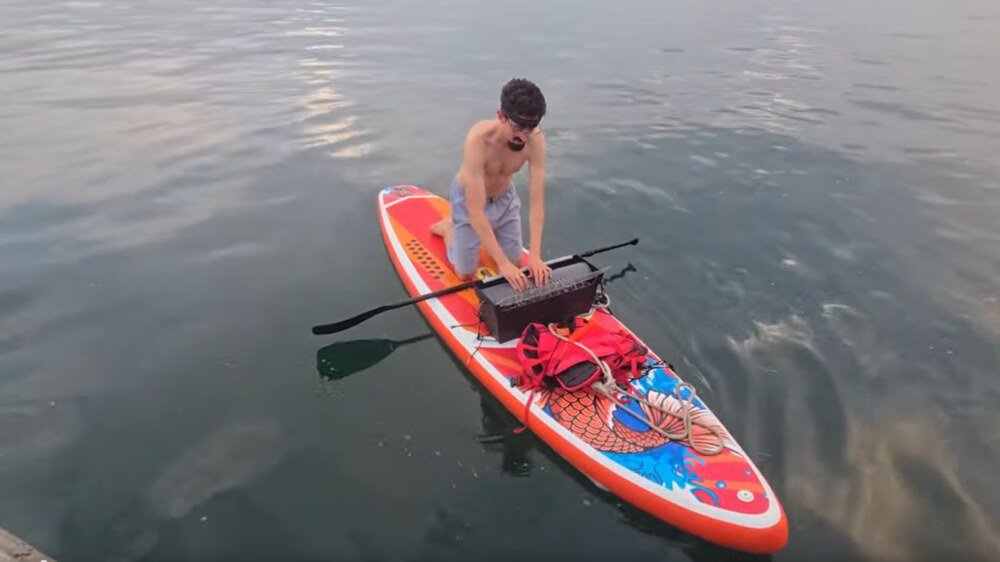
Playing the hydraulophone from a paddleboard on Lake Ontario while a Muse headband reads brain state and head motion.
The hydraulophone is an instrument played by touching jets of water. Our State-of-Float studies found that floating changes the theta/beta ratio read by a consumer EEG headband; in Mind over Music the same index plays the instrument. The theta/beta ratio chooses major or minor harmony, an arousal index chooses the register, and the headband's accelerometer pumps the sound with every headbang, so the state of float becomes audible, in the spirit of Mersivity.
Three players used it over two days, on the water and in VR. The paper looks honestly at what the headband contributes to the music, and at how motion and electrode contact have to be treated as part of the instrument rather than as noise.
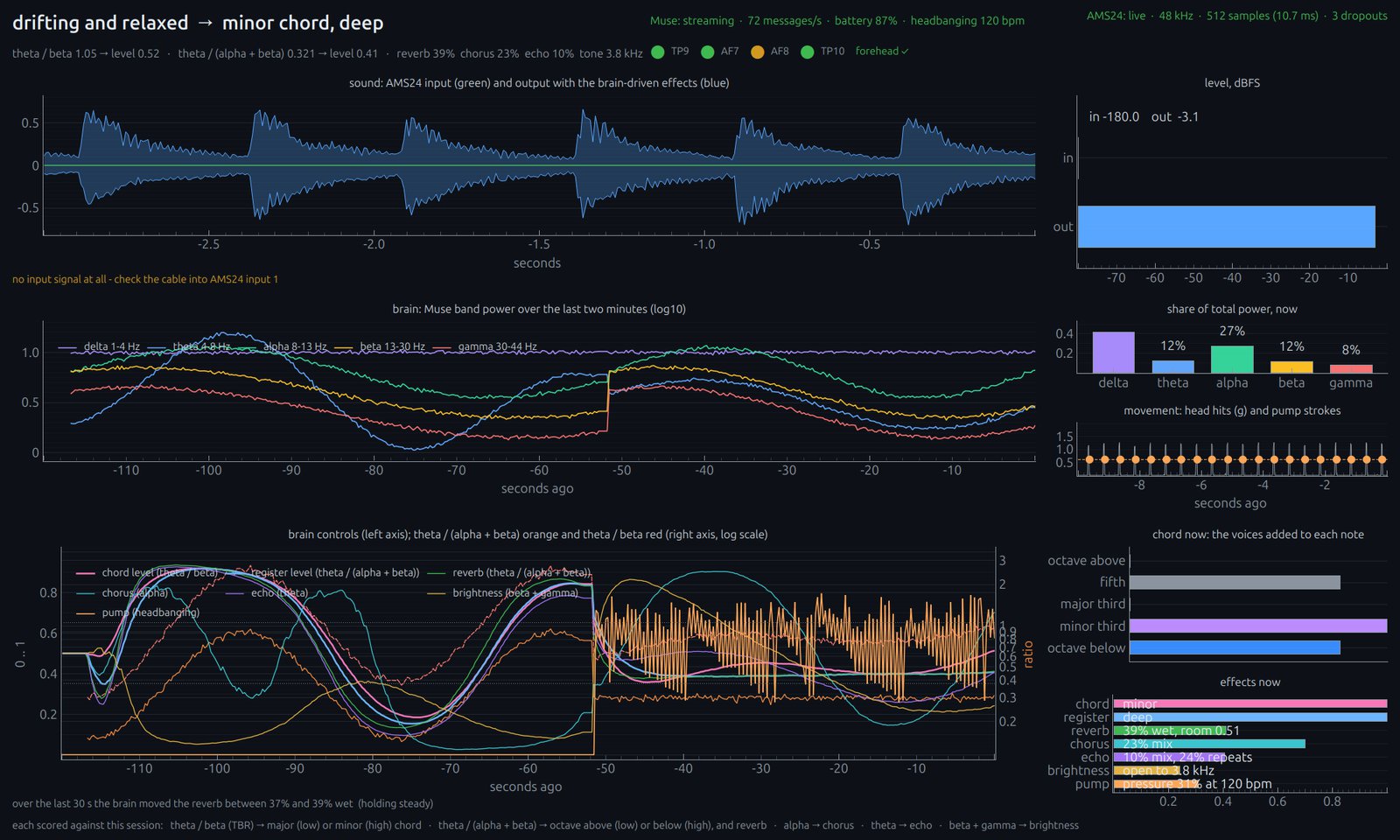
The live dashboard: band powers from the headband become chord, register, reverb, chorus, echo and brightness, and headbanging pumps the sound.
This paper is not yet published, so this page gives only a short summary. The full write-up and a link to the paper will follow publication.
Authors
Alexander Vicol, Rhyzome Adkisson, Steve Mann and Mersivity members (full author list to follow)
Links
- Paper prepared for IEEE ICASSP 2027. A link will appear here once it is published.
- Related project: Boardmusic
- Related project: State-of-Float
- Related project: Watermann