OpenTactile: Low-Cost Open-Source Wearable Tactile Sensing Glove with STM32 Edge Telemetry and Real-Time Multi-Region Force Visualization
IEEE International Conference on Consumer Electronics (ICCE) 2027
Las Vegas, USA, January 2027 · Submitted to IEEE ICCE 2027; not yet published
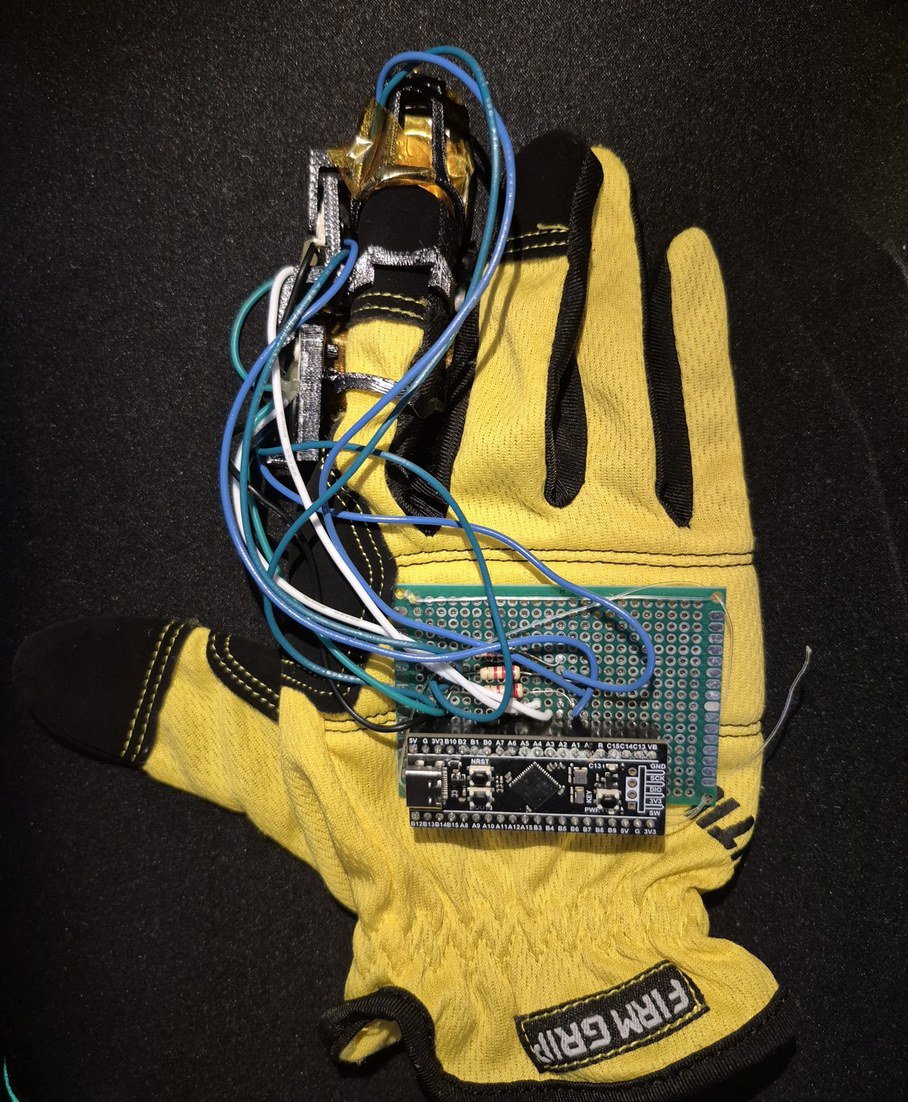
The glove from the back: the STM32 'black pill' board and the wiring to the sensors on the palm side.
Commercial tactile gloves are expensive and closed. OpenTactile is a glove you can build from a work glove, pressure-sensitive pads, bend sensors and a 5-dollar STM32 board, with a dashboard that shows where your hand is pressing and how hard, live.
Jason Thai built it at MannLab; the paper describes the hardware, the firmware that streams the readings, and the visualisation, and releases all of it.
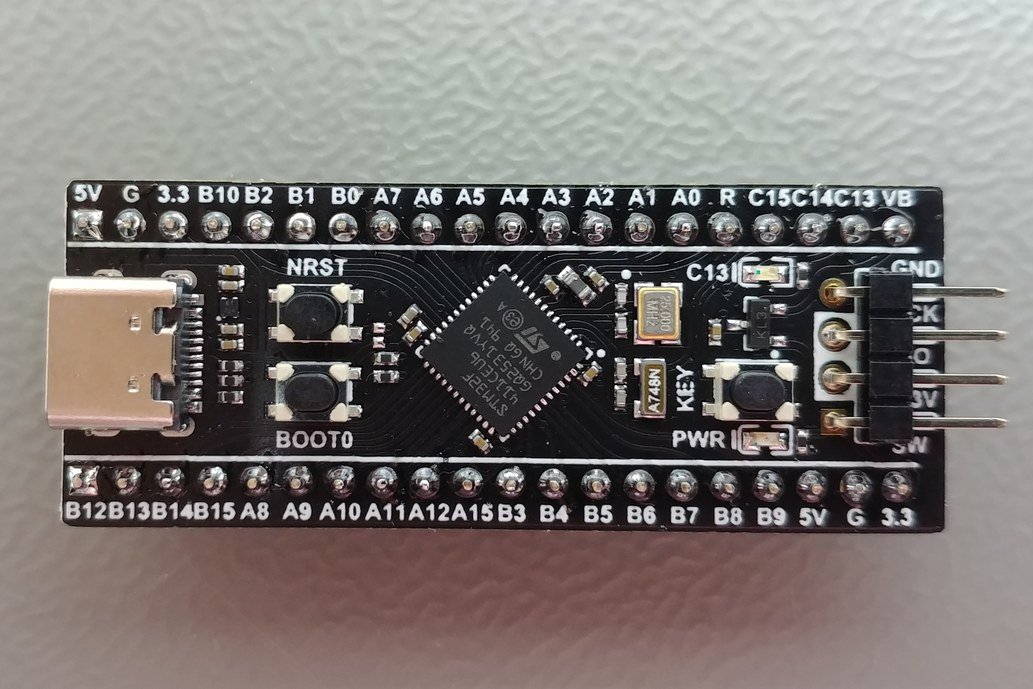
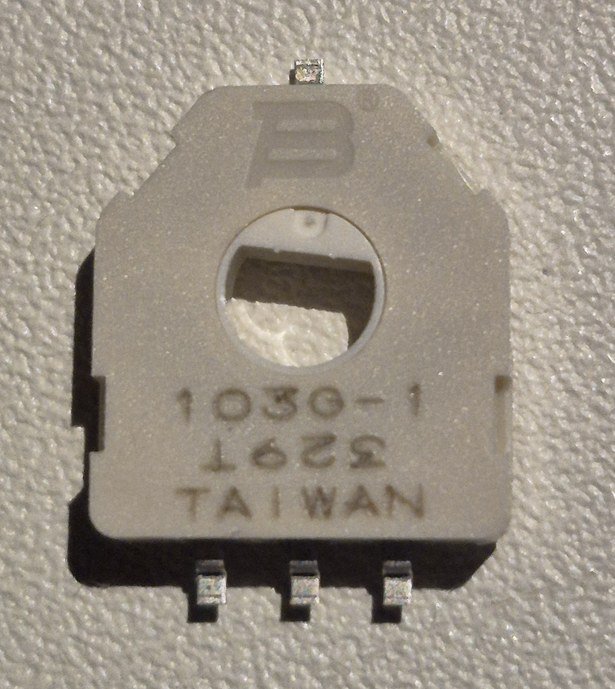
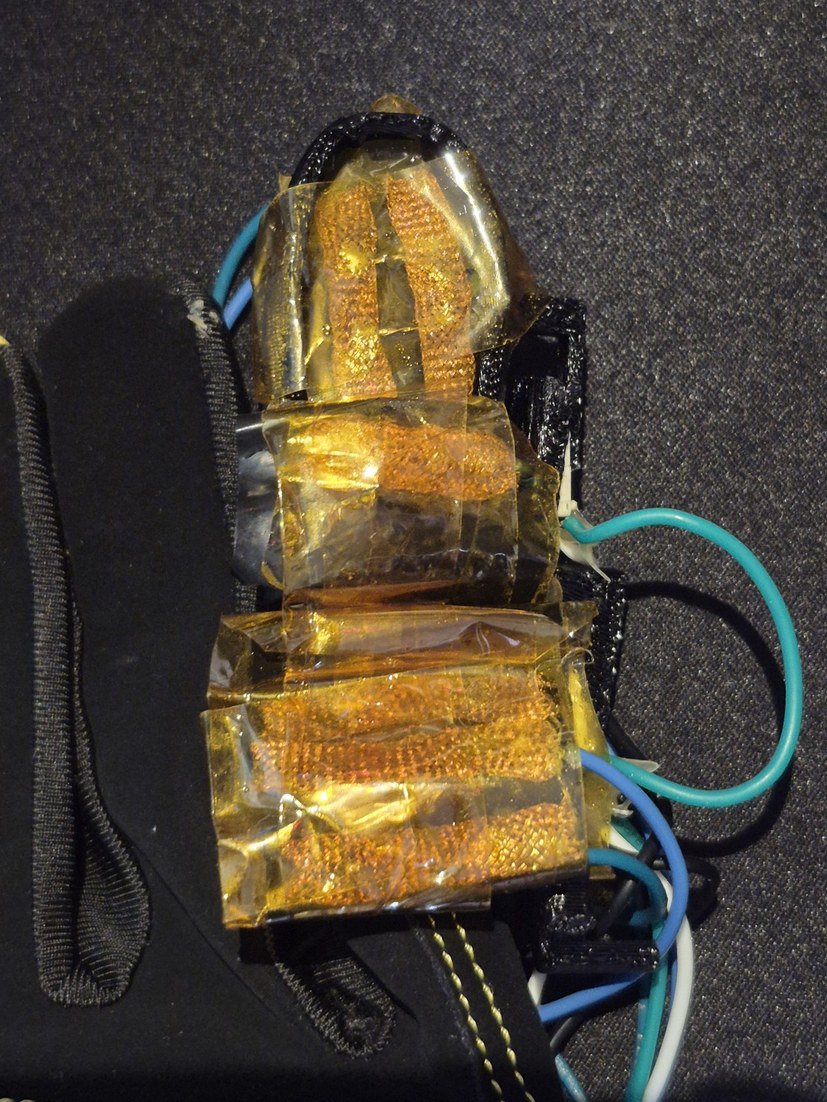
The palm side: pressure-sensing regions along the fingers, read out in real time.
Abstract
Commercial haptic and tactile sensing gloves are often costly, complex, and closed-source, which limits their use in clinical rehabilitation, human-computer interaction (HCI) research, and assistive devices for people with sensory loss or neuropathy. We present OpenTactile, an open-source tactile sensing glove built from about $50 of parts. It instruments the index finger with three 3D printed cuffs carrying custom piezo-resistive force-sensing resistors (FSRs), each a sandwich of pressure-sensitive conductive sheet (Velostat) between solder-wick electrodes, on the distal, middle, and proximal phalanges (DP, MP, PP), and two surface-mount rotary potentiometers that track bending of the DIP and PIP joints. An STM32F411 microcontroller running MicroPython samples the five analog channels, converts them to force and joint angle on the device, and streams a synchronized telemetry frame over USB at 20 Hz to a PyQt desktop interface that plots per-region force and bend angle in real time. We describe the hardware, firmware, and desktop interface, demonstrate the glove on three everyday grasps, and discuss its current limitations and the calibration needed for quantitative use.
Authors
Jason Thai, Alexander Vicol, Steve Mann
Links
- Paper submitted to IEEE ICCE 2027 (Las Vegas, January 2027). A link will appear here once it is published.
- Related project: DiaShoe
- Related project: EEG Word Keyboard
- Related project: Mind over Motor