Interactive Quaternion Visualization and Form Training Using an IMU and LED Strip
27th Annual Mersivity / WaterHCI Symposium, Summer 2025
Toronto and online, June 20 to August 25, 2025 · Published in the symposium proceedings (open access on Zenodo)
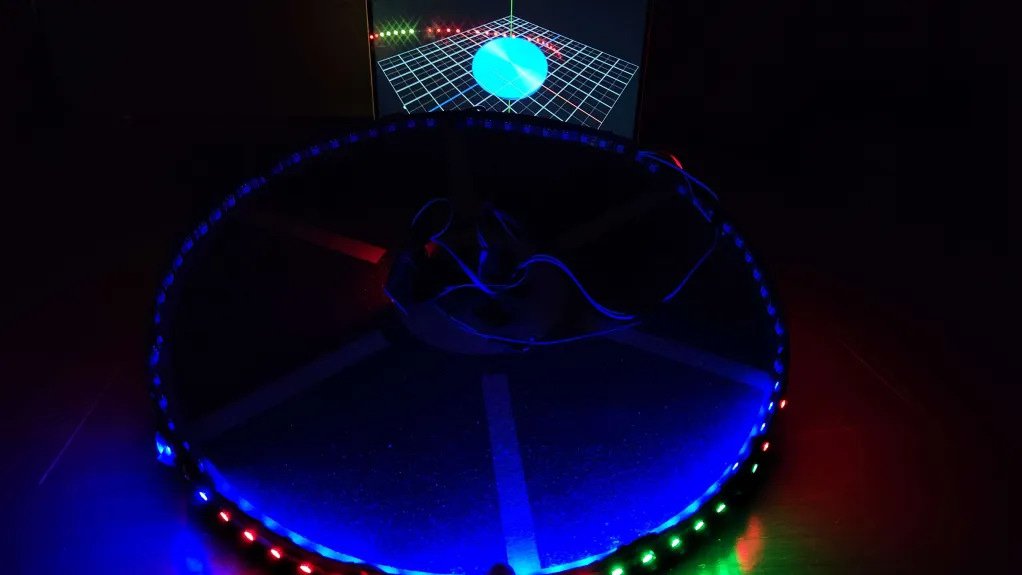
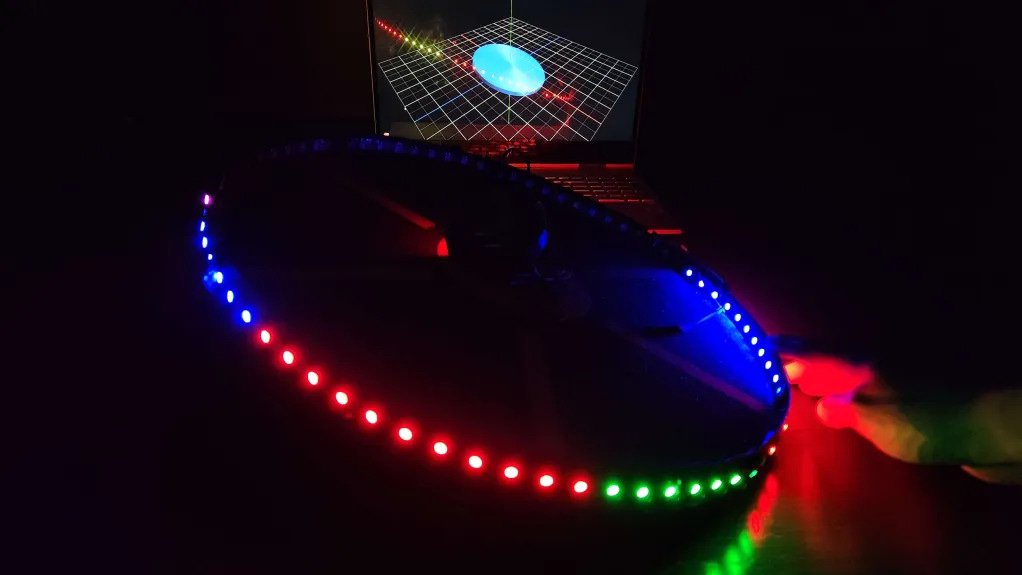
The board's LED ring shows the orientation the IMU reads; the laptop shows the same rotation as a disc on a grid.
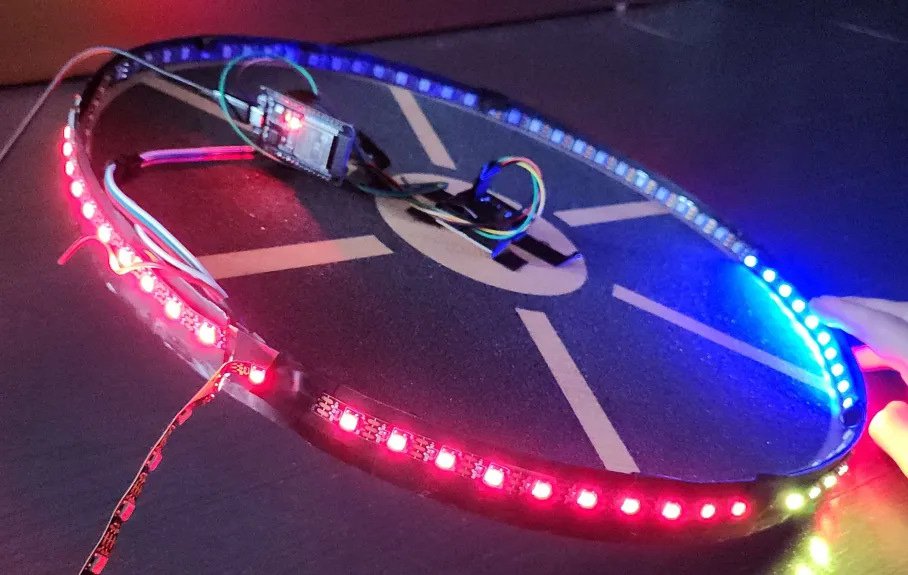
Quaternions are how robots and VR headsets represent rotation, and they are famously hard to feel. This project puts you on a balance board ringed with LEDs: an ESP32 reads an inertial sensor, lights the ring to show your rotation, and runs a water-spilling game that rewards controlled movement. You learn rotational geometry with your ankles.
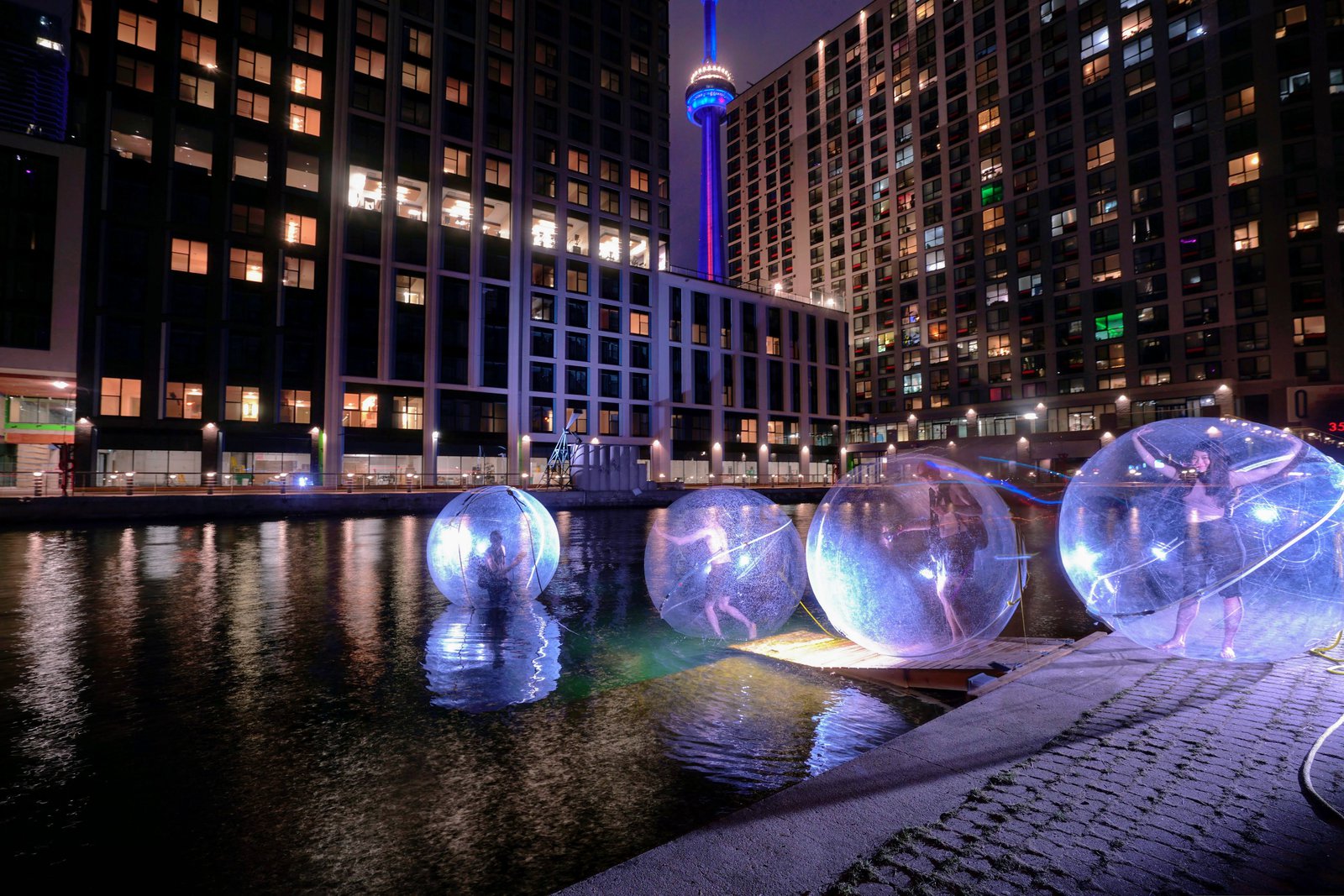
The idea came from Mann's quaternion ball: balling at Peter Street Basin at night, May 2025.
Abstract
This project presents an interactive game system designed to teach the concept of quaternions and enhance exercises using an inertial measurement unit (IMU) and an addressable LED strip. The system, mounted on a balance board, visualizes quaternion-based rotations in order for this concept to be more understandable and implements a gamified "water spilling" simulation to encourage controlled movement, leading to better form, increased effectiveness of workouts, and increasing the fun simultaneously. The ESP32 microcontroller processes IMU data, translates orientation into LED patterns, and dynamically adjusts visuals based on user movement. This report details the system's design, implementation, and experimental evaluation, highlighting its effectiveness in education, fitness, and gaming applications.
Authors
Anne Chow, Matthew Maciesowicz, Danilo Zelenovic
Links
- Paper in the Mersivity / WaterHCI Summer-2025 Symposium Proceedings (Zenodo, open access)
- Related project: Spinal Drift
- Related project: Triple Spring SWIM
- Related project: Brain Data Visualization in VR/XR