Triple Spring SWIM: Making Spring-Mass Oscillations Visible with Light Trails and a Consumer Camera
IEEE International Conference on Consumer Electronics (ICCE) 2027
Las Vegas, USA, January 2027 · Submitted to IEEE ICCE 2027; not yet published
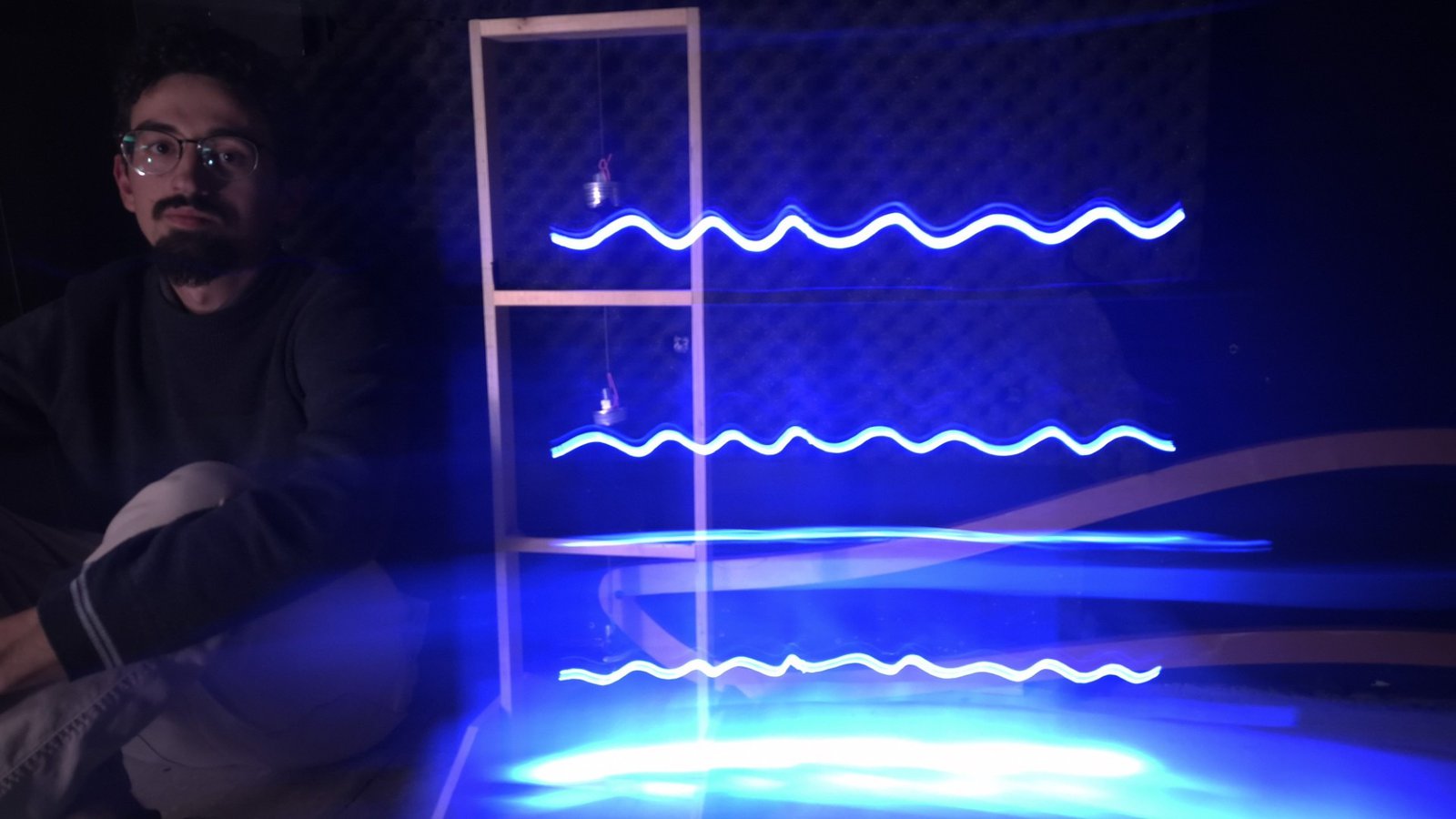
Three spring-mass oscillators, each with an LED, swept past a phone in panorama mode: the lightest mass makes the tightest wave.
Steve Mann's Sequential Wave Imprinting Machine draws waves in the air with light. Triple Spring SWIM does it with physics itself: a wooden frame holds three springs loaded with bolts and washers, each with an LED on the mass. Pull them down, let go, and sweep a phone in panorama mode across the scene in a dark room. The LEDs leave three light trails, stacked for comparison, and the trail of the lightest mass wiggles fastest, as it should.
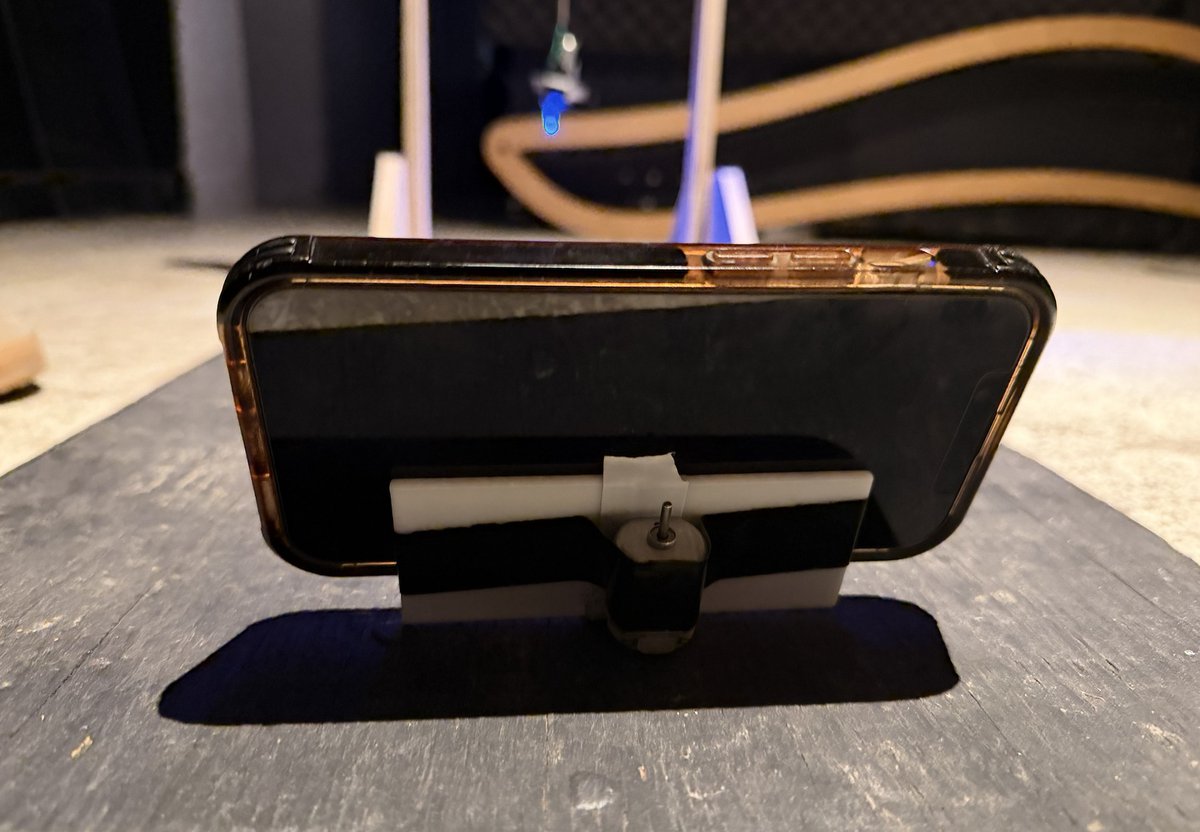
The paper is careful to separate what was demonstrated from what is proposed, and sets out an evaluation plan for each extension: a motorised phone holder, water reservoirs that retune each oscillator, and software that plays a MIDI file on the springs.
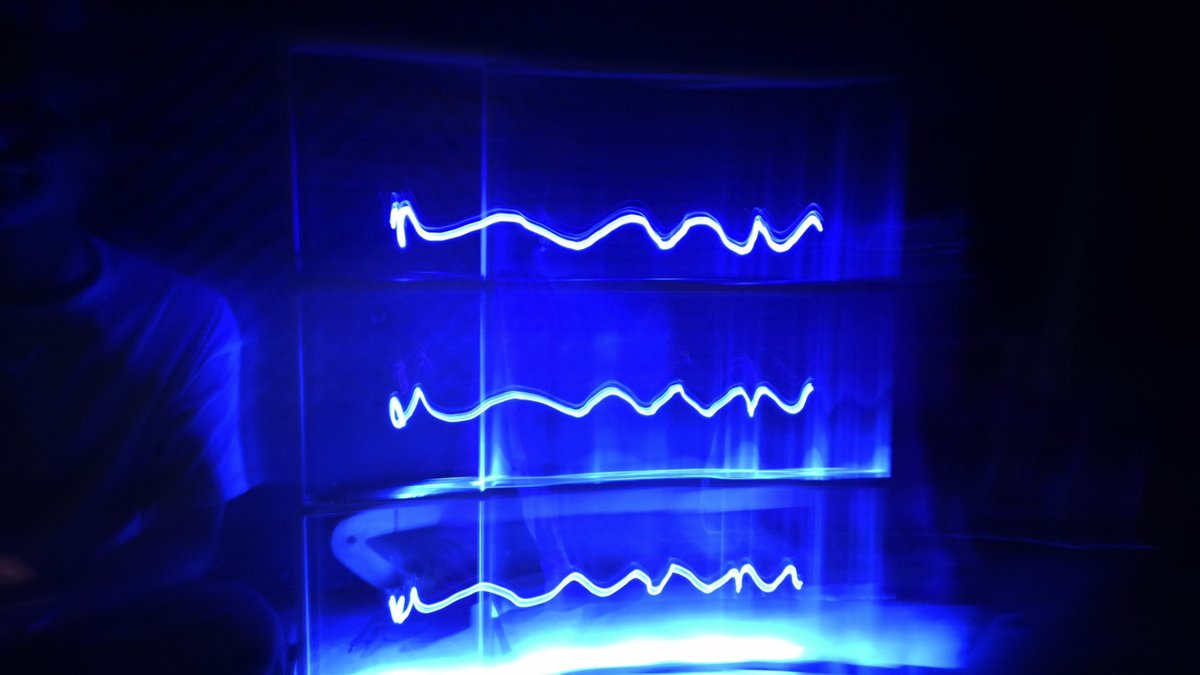
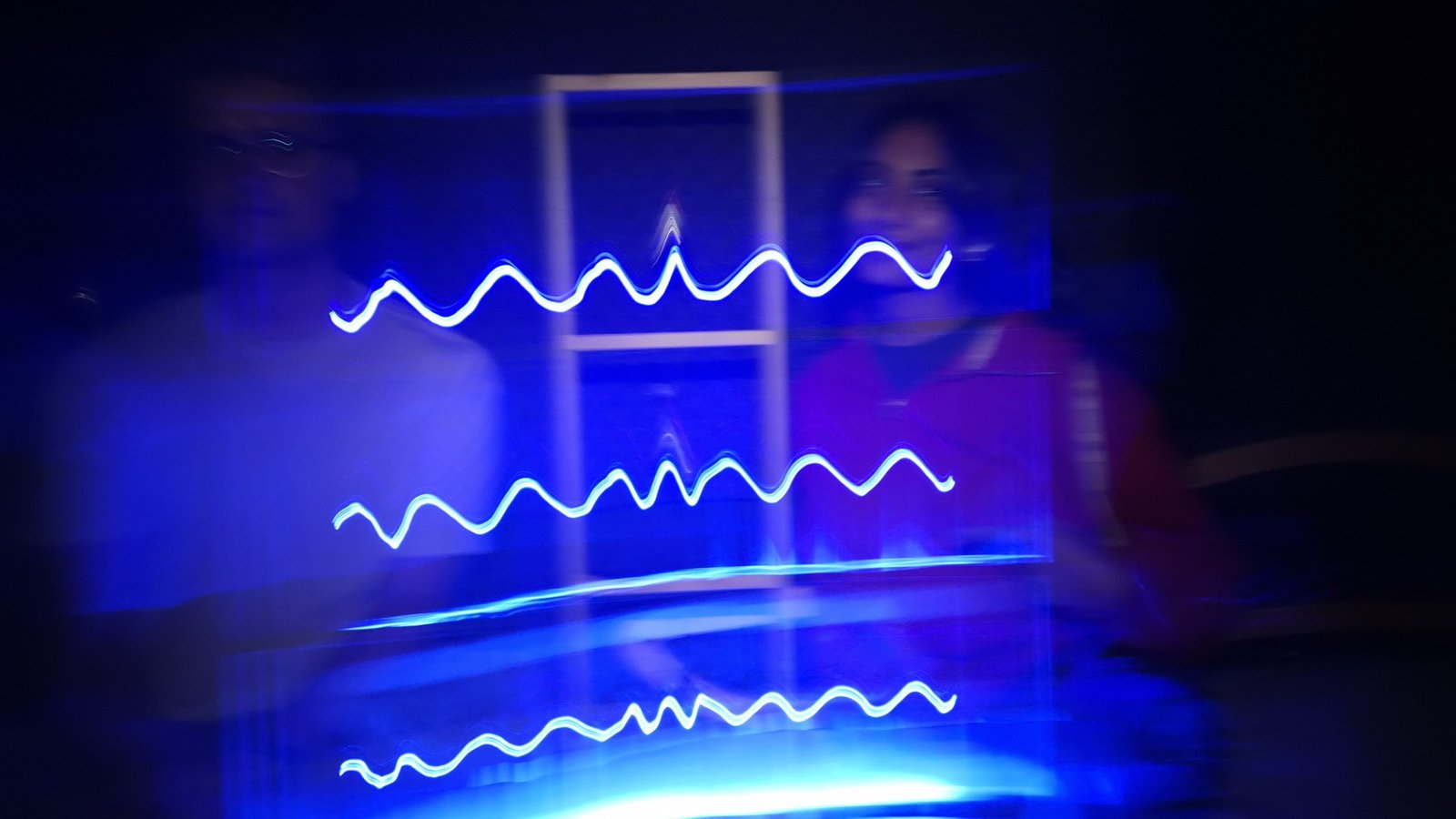
Two of the authors holding the frame as the trails are captured.
Abstract
Triple Spring SWIM is a mechanical device that makes three spring-mass oscillations visible in a single photograph, in the tradition of the Sequential Wave Imprinting Machine (SWIM). A wooden frame carries three springs, each loaded with bolts and washers in an approximate mass ratio of 0.45 : 0.66 : 1 and fitted with a battery-powered LED. The masses are pulled down and released while a phone in panorama mode is swept across the scene in a dark room, so the LEDs leave light trails that record the position of each mass, stacked vertically for comparison, while a flashlight shows the apparatus and the people holding it. For equal spring stiffness the expected frequency ratio is 1.49 : 1.23 : 1 from lightest to heaviest. The trails show the different peak spacings qualitatively, and tracking the LEDs in video gives mechanical frequencies of approximately 1.6–2.5 Hz, which a common speed-up factor turns into audible tones with the same ratios. We describe the apparatus and the capture and tracking method, and propose three consumer extensions: a motorized phone holder for repeatable sweeps, water reservoirs that retune each oscillator, and software that turns a MIDI file into a schedule of tuning and release operations. We separate what has been demonstrated from what is proposed, and set out an evaluation plan for each extension.
Authors
Eshaa Chenthuran, Dominik Danda, Alexander Vicol, Steve Mann
Links
- Paper submitted to IEEE ICCE 2027 (Las Vegas, January 2027). A link will appear here once it is published.
- Related project: Neurow
- Related project: Quaternion Balance Board
- Related project: Brain Data Visualization in VR/XR