Neurow: Neural Rowing with Chirplet Transform and S.W.I.M.-Based Neurofeedback
28th Annual Mersivity / WaterHCI Symposium 2026
Toronto and online, March 30 to May 10, 2026 · Published in the symposium proceedings (open access on Zenodo)
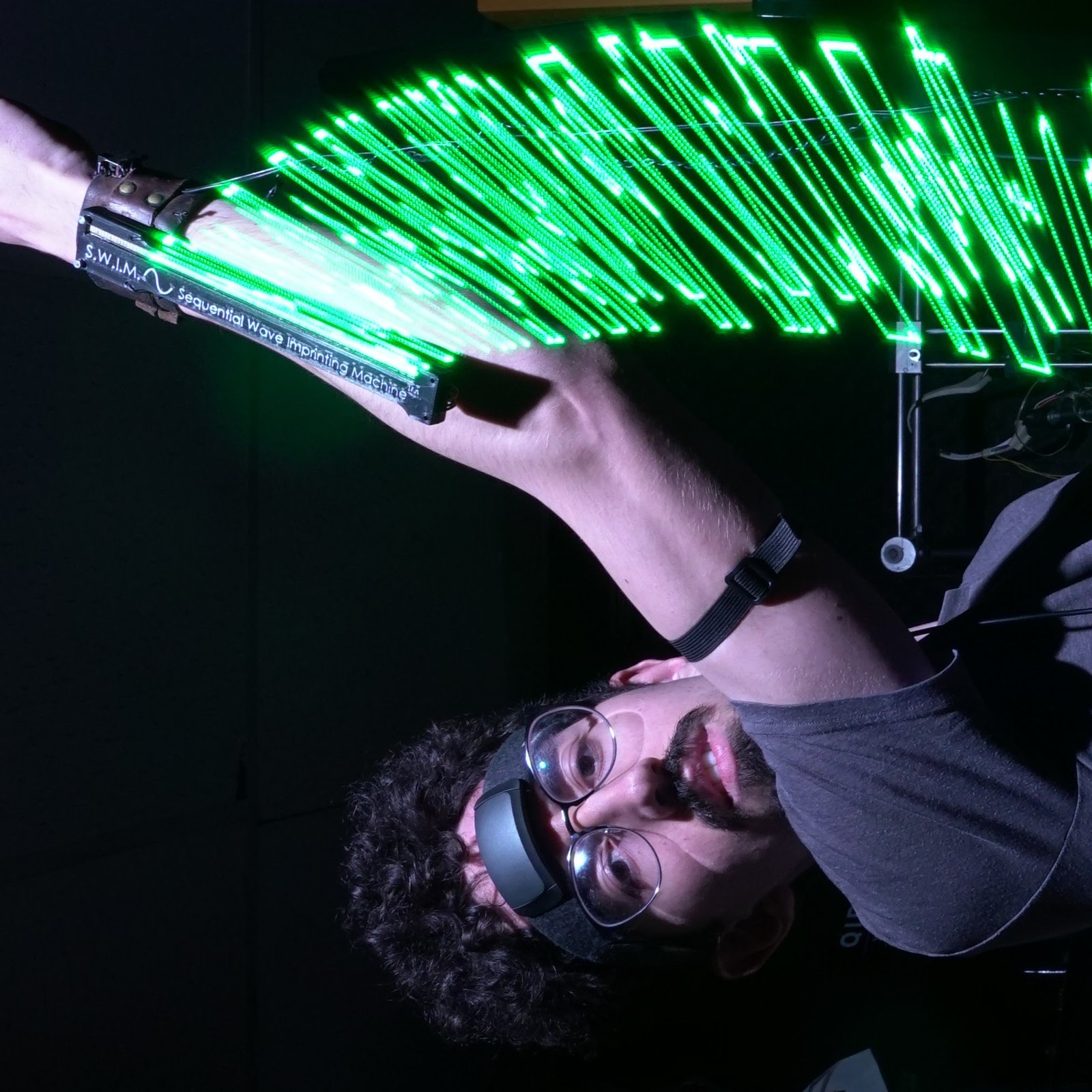
A rowing stroke on the Neurow machine: the handle carries a S.W.I.M. that traces the rower's EMG as a green arc of light through space.
Mann's Sequential Wave Imprinting Machine makes invisible waves visible with a moving line of light. Put one on a rowing handle, feed it the rower's muscle signal, and every stroke paints an arc of EMG in the air, exactly where the pull happened. That is Neurow, a project with roots in the 1980s that the club now teaches with, on the water and on a dryland machine built from an ordinary rower.
The paper also releases a dataset: 1,347 segmented strokes from six rowers wearing EMG, plus 254 bicep curls for comparison, with scripts, metadata and a leaderboard protocol, so others can build rowing neurofeedback on top of it.
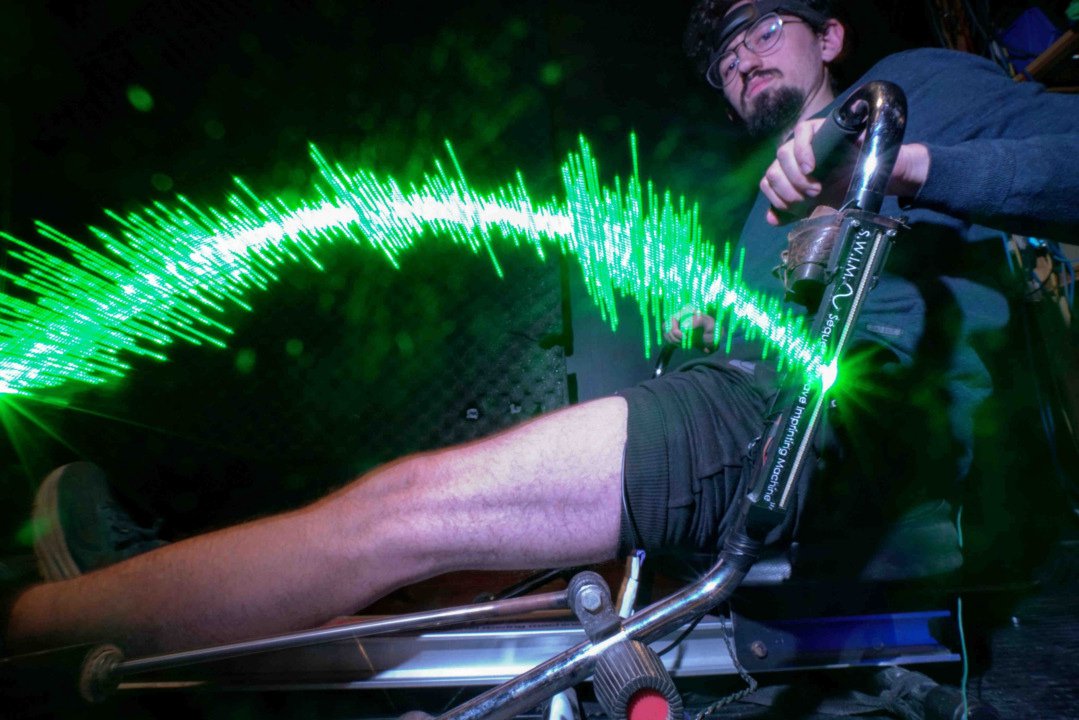
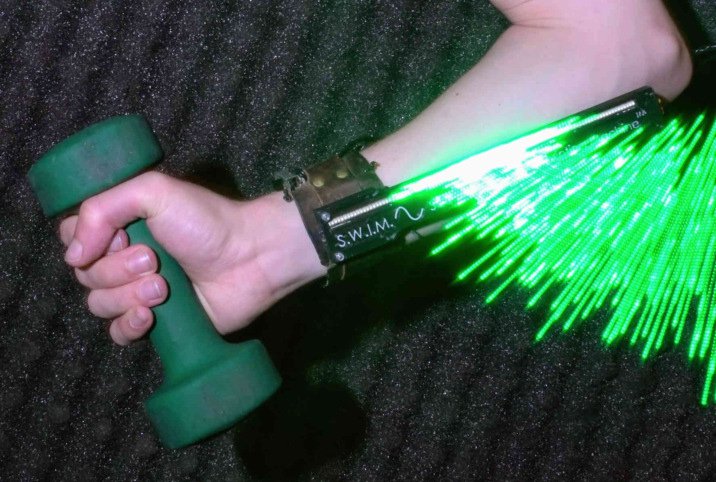
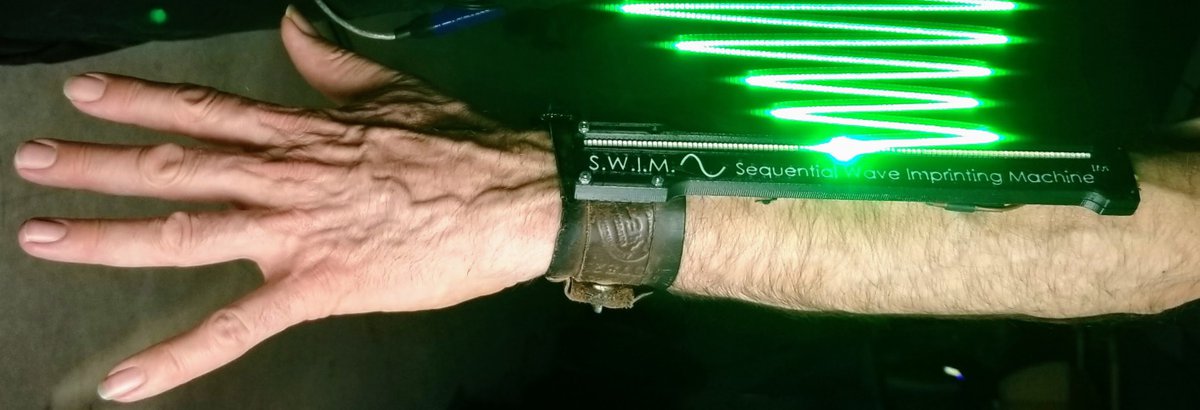
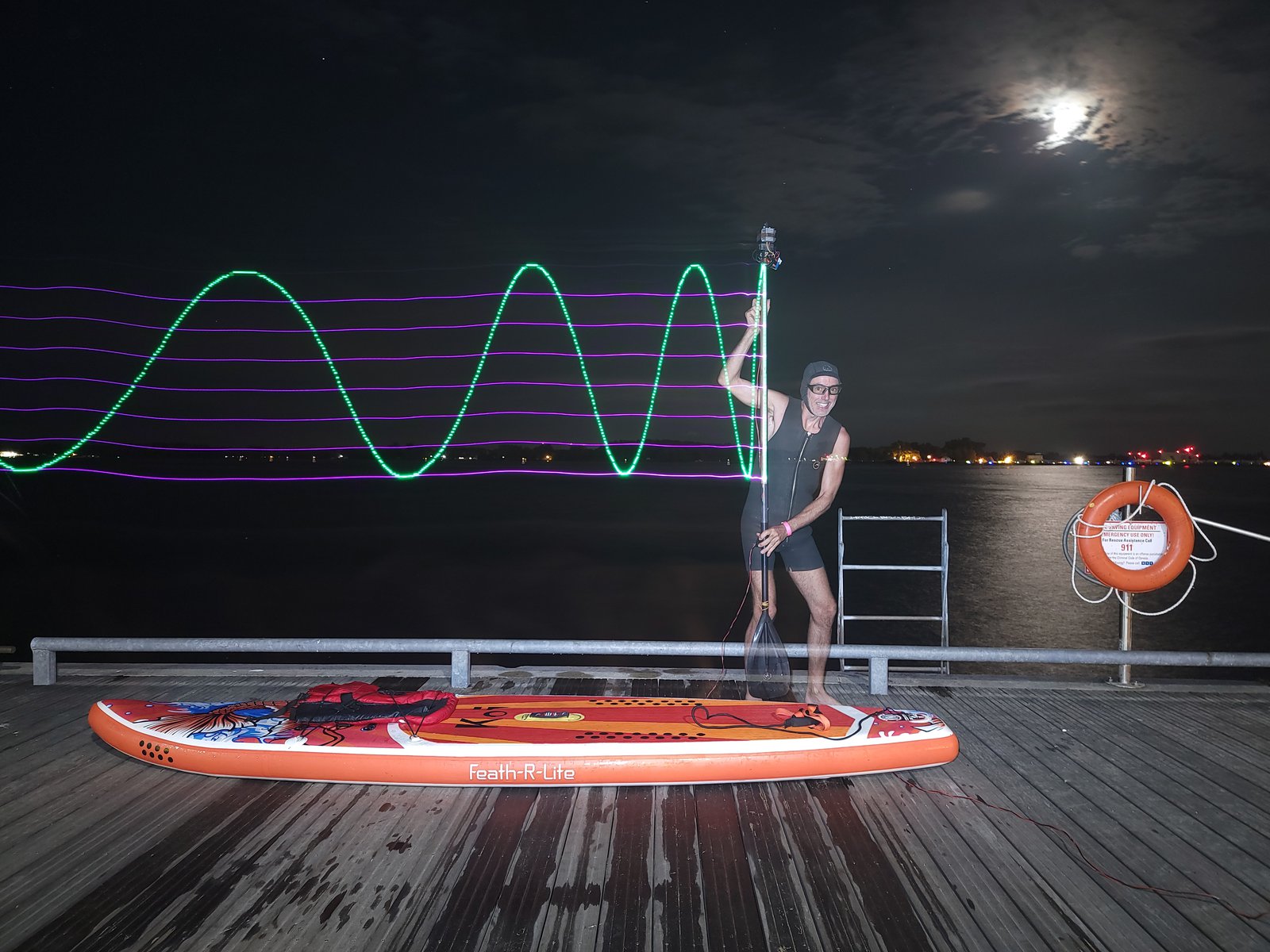
The same idea on water: a S.W.I.M. on a paddle, drawing a wave over the board at night.
Abstract
NeuroRow™ is a stroke-synchronous peripheral nervous sensing, display, and biofeedback system for rowing, paddling, and other cyclically periodic exercise activity that we developed in the 1980s. We brought this work to MIT in the 1990s, University of Toronto in the 2000s, and Stanford University in the mid 2010s and presently teach it as part of ongoing lectures and labs. It uses a S.W.I.M. (Sequential Wave Imprinting Machine) to spatialize muscle activity on its temporally persistent LED trace. Neurow works with the peripherhal nervous system by way of EMG (ElectroMyoGraphy), and, optionally also connects to the central nervous system by way of EEG (ElectroEncephaloGraphy), both of which are analyzed using the warblet chirplet transform that was originally designed for marine applications in 1991. Neurow facilitates neurofeedback during whole-body water-based exercises, e.g. using a waterproof S.W.I.M.and EMG system. We present some results from the use of Neurow in teaching undergradate and graduate students of Electrical and Computer Engineering at the University of Toronto in Canada where rowing is a popular sport owing to the close proximity to Lake Ontario and, in particular, the Ontario Place West Channel which is an ideal location for rowing. For teaching and research, we also created a dataset containing 1,347 segmented rowing strokes from six EMG-bearing rowers across 28 trials, plus 254 bicep-curl repetitions from two EMG-bearing subjects for comparison. We release the dataset, scripts, Croissant metadata, and leaderboard protocol as a reusable framework for larger rowing neurofeedback studies.
Authors
Steve Mann, Alexander Vicol, Kyle Simmons, Michel Herrera Viyella, Chris McGale, Chan Park, Aidin Hosseingholizadeh, Ming-Chang Tsai, Michel Kliot
Links
- Paper in the Mersivity / WaterHCI 2026 Symposium Proceedings (Zenodo, open access)
- Related project: Boardmusic
- Related project: Triple Spring SWIM
- Related project: Watermann
- Related project: Asymmetric Chirplets